The night before your workout try this:
Close your eyes and think of your workout. Visualize each exercise, set and repetition. Decide on the weight you are going to use. Visualize how good the workout is going to be. By visualizing the workout you will be preparing yourself for a great workout. You will know in your mind that the workout will turn out the way you intended it. You are re-creating the workout as it will be. Great athletes use this technique to score that goal or hit that homerun.
Visualization is a learned skill. The more you practice it the better you will get at it.
Visualization will develop your confidence in executing exercises to their fullest potential.
These are the best conditions for visualizing:
* Be in a quiet environment (just as you are going to bed is good.)
* Make sure that you are relaxed (Don't let your mind wander.)
* Visualize in detail. (Think of each exercise, set, repetition and weight.)


Bodyfat Testing Methods
Skinfold caliper test
The tester uses the calipers to pinch(it doesn't hurt) the skin on 3 to 7 parts of your body. The caliper is a gauge that measures the thickness of the fat.
The parts pinched are usually:
* abdomen
* back of the arm
* thigh
* hip
* back of shoulder
The caliper is not exact. The margin of error is 4 points either way. The tester might not pinch exactly in the right area, or may pinch too hard or too light. Get tested before your workout. After working out, your body pumps up which may make the calipers gauge you to be fatter.
Bioelectrical Impedence
A low voltage is passed through your body to determine bodyfat. The slower the signal the more fat you have. Fat slows down the signal. The signal travels quickly through muscle because muscle is made up of 70% water and water conducts electricity. Fat is only 5 to 13% water so it slows down the signal.
Dehydration can make the readings false because less water is in your system. Stay away from alcohol or caffeine for 24 hours because these substances help to dehydrate the body.
If you are overly fat or really lean this test may not produce good results.
Underwater weighing
This is the most accurate method of testing. You get into a tank of water on a scale. Here is the hard part, you have to blow all of the air out of your lungs and bend forward until you are completely submerged. Make sure to get all of the air out because any extra air makes you appear fatter. You wait about 5 seconds under water while your weight is taken.
Your underwater weight is figured out by a mathematical algorithm that determines your bodyfat. This test is based upon the premise that muscle sinks and fat floats. Muscle is denser than fat therefore it sinks. The margin of error on this test is 2 percent.
The tester uses the calipers to pinch(it doesn't hurt) the skin on 3 to 7 parts of your body. The caliper is a gauge that measures the thickness of the fat.
The parts pinched are usually:
* abdomen
* back of the arm
* thigh
* hip
* back of shoulder
The caliper is not exact. The margin of error is 4 points either way. The tester might not pinch exactly in the right area, or may pinch too hard or too light. Get tested before your workout. After working out, your body pumps up which may make the calipers gauge you to be fatter.
Bioelectrical Impedence
A low voltage is passed through your body to determine bodyfat. The slower the signal the more fat you have. Fat slows down the signal. The signal travels quickly through muscle because muscle is made up of 70% water and water conducts electricity. Fat is only 5 to 13% water so it slows down the signal.
Dehydration can make the readings false because less water is in your system. Stay away from alcohol or caffeine for 24 hours because these substances help to dehydrate the body.
If you are overly fat or really lean this test may not produce good results.
Underwater weighing
This is the most accurate method of testing. You get into a tank of water on a scale. Here is the hard part, you have to blow all of the air out of your lungs and bend forward until you are completely submerged. Make sure to get all of the air out because any extra air makes you appear fatter. You wait about 5 seconds under water while your weight is taken.
Your underwater weight is figured out by a mathematical algorithm that determines your bodyfat. This test is based upon the premise that muscle sinks and fat floats. Muscle is denser than fat therefore it sinks. The margin of error on this test is 2 percent.
Creatine Monohydrate
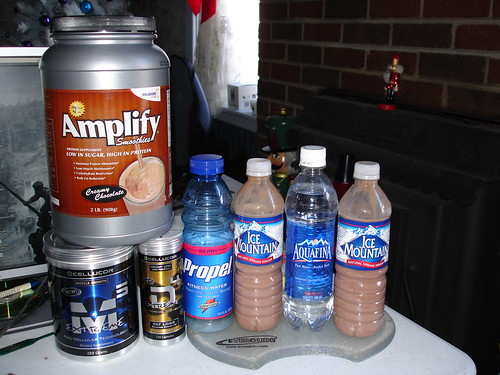
What is Creatine Monohydrate and what it
can do for you:
Creatine monohydate has been shown to increase the maximum number of repetitions to failure, allows for heavier lifts, and promotes greater gains in strength, while delaying fatigue and decreasing recovery time.
Increases in lean mass are seen as a result of creatine absorbing additional fluid into the cells resulting in better cellular hydration. Increased hydration not only causes the muscle to appear fuller and rounder but actually improves overall health by allowing a greater flow of nutrients into the cell.
How and when should creatine be taken?
1. Loading period: 10-20 grams (about 2-4 full teaspoons) per day, spaced throughout the day in 5 gram amounts, for 5-7 days is suggested.
2. Maintenance Period : One to two teaspoons (5-10 grams) daily.
3. Take creatine with grape juice or other high carbohydrate drink
4. You should take creatine one hour before a workout to give creatine time to get to the muscle. You need to take creatine on a daily basis to maintain the creatine levels in your system.
How Creatine Works:
Energy for muscle contraction is provided by adenosine triphosphate (ATP) as it releases one phosphate molecule. This release results in the conversion of ATP into adenosine diphosphate (ADP). Phosphocreatine stores within the muscle supply a new phosphate molecule to reconvert the resulting ADP back into ATP. The abundance of phosphocreatine stores during short intense exercises such as weight lifting or sprinting determines your ultimate performance level. As phosphocreatine levels drop, your body loses it ability to quickly resynthesize ADP for additional muscle energy. Creatine supplementation improves athletic performance during intense exercise by increasing the levels of ADP that can be resynthsized.
Boosting your Metabolism
Definition of metabolism:
Metabolism is the number of calories that you burn at any given moment. Your metabolism burns more calories while you are active then when you are at rest.

Metabolism, measured in oxygen consumption (because oxygen is inhaled to facilitate the breakdown of glucose) measured immediately after exercise then 10, 20, 30 minutes after.
the pink line is the metabolism as measured *before* exercise began.
Things you can do to raise your metabolism:
1. Workout with weights
By lifting weights you build more muscle. Muscle burns more calories than fat. Therefore, working out with weights will speed up your metabolism.
2.Eat more often
By eating more often you will be spreading your calories between 5 to 6 small meals a day. These calories will be used for energy instead of being stored as fat. The combination of smaller, more frequent meals allows your body to get nutrients when it needs them. When you give the body small doses of energy throughout the day it will use this energy instead of your muscle tissue. When you wait a long time between meals your metabolism slows down because it thinks that you are starving yourself. By eating frequent meals you will stabilize your blood sugar levels and help to avoid dips in energy, which cause you to head for the nearest vending machine.
3.Cardio work
Cardio work is a good way to burn calories, and speed up your metabolism. You should be training in your target heartrate. Your target heartrate is calculated as follows: 220 minus your age, multiplied by 0.6 = lower limit 220 minus your age, multiplied by 0.8 = upper limit By staying within these limits you will be utilizing the most fat while sparing muscle.
4.Stimulants
There are many stimulants out there that contain ma-haung, caffeine and aspirin. These three ingredients together make a very potent stimulant. Stimulants will help you to boost your metabolism, but they will only work for a short time because your body will adapt to them.
Here is a way to estimate your "Basal Metabolic Rate"
Your basal metabolic rate (BMR) is a measure of how fast your metabolism is running. It's the number of calories you burn to keep your heart beating, to keep you breathing, to keep your muscles alive, etc. It's the number of calories your body needs while at rest.
Women: 661 + (4.38 x weight in pounds) + (4.33 x height in inches) - (4.7 x age) = BMR
Men: 67 + (6.24 x weight in pounds) + (12.7 x height in inches) - (6.9 x age) = BMR
To estimate the TOTAL number of calories your body needs per day, multiply your BMR by the appropriate number below.
* 0.9 if you are sedentary and have yo-yo or crash dieted frequently during the past two years
* 1.2 if you are sedentary
* 1.3 if you are moderately active (exercise 3 days per week or equivalent)
* 1.7 if you are very active
* 1.9 if you are extremely active
This is only a way to estimate caloric expenditure.
Metabolism is the number of calories that you burn at any given moment. Your metabolism burns more calories while you are active then when you are at rest.
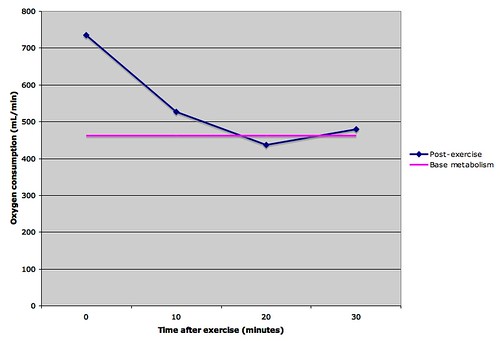
Metabolism, measured in oxygen consumption (because oxygen is inhaled to facilitate the breakdown of glucose) measured immediately after exercise then 10, 20, 30 minutes after.
the pink line is the metabolism as measured *before* exercise began.
Things you can do to raise your metabolism:
1. Workout with weights
By lifting weights you build more muscle. Muscle burns more calories than fat. Therefore, working out with weights will speed up your metabolism.
2.Eat more often
By eating more often you will be spreading your calories between 5 to 6 small meals a day. These calories will be used for energy instead of being stored as fat. The combination of smaller, more frequent meals allows your body to get nutrients when it needs them. When you give the body small doses of energy throughout the day it will use this energy instead of your muscle tissue. When you wait a long time between meals your metabolism slows down because it thinks that you are starving yourself. By eating frequent meals you will stabilize your blood sugar levels and help to avoid dips in energy, which cause you to head for the nearest vending machine.
3.Cardio work
Cardio work is a good way to burn calories, and speed up your metabolism. You should be training in your target heartrate. Your target heartrate is calculated as follows: 220 minus your age, multiplied by 0.6 = lower limit 220 minus your age, multiplied by 0.8 = upper limit By staying within these limits you will be utilizing the most fat while sparing muscle.
4.Stimulants
There are many stimulants out there that contain ma-haung, caffeine and aspirin. These three ingredients together make a very potent stimulant. Stimulants will help you to boost your metabolism, but they will only work for a short time because your body will adapt to them.
Here is a way to estimate your "Basal Metabolic Rate"
Your basal metabolic rate (BMR) is a measure of how fast your metabolism is running. It's the number of calories you burn to keep your heart beating, to keep you breathing, to keep your muscles alive, etc. It's the number of calories your body needs while at rest.
Women: 661 + (4.38 x weight in pounds) + (4.33 x height in inches) - (4.7 x age) = BMR
Men: 67 + (6.24 x weight in pounds) + (12.7 x height in inches) - (6.9 x age) = BMR
To estimate the TOTAL number of calories your body needs per day, multiply your BMR by the appropriate number below.
* 0.9 if you are sedentary and have yo-yo or crash dieted frequently during the past two years
* 1.2 if you are sedentary
* 1.3 if you are moderately active (exercise 3 days per week or equivalent)
* 1.7 if you are very active
* 1.9 if you are extremely active
This is only a way to estimate caloric expenditure.
Curbing Your Appetite
Do you ever feel that instead of you having control of your appetite, it has control of you? We all do from time to time, and for some of us, it can be a constant, daily struggle. But fortunately, it doesn't have to be that way. Learning to curb your appetite naturally is the key to safe, effective weight maintenance and weight loss. The following are 11 situations that affect our appetite and tips on how we can overcome the struggle:
The type of music you listen to while eating can have an effect on your appetite. A study done at the Johns Hopkins Medical Institutions Clinic suggests that people who listen to fast music while they dine take more and larger forkfuls of food per minute (about five forkfuls) than those who listen to slow music (about four forkfuls). People who chewed to quick rhythms were also more likely to finish their food and request seconds.
When eating at home, make sure that any music that's playing is slow. If you're in a restaurant that's playing fast music, order a low-calorie dish that takes a long time to eat, such as a main-dish pasta or pasta with marinara sauce. And be sure to put your fork down between bites.
Get plenty of sleep. Research indicates that when your body is suffering from sleep deficit, the appetite gets stimulated. When you skimp on sleep, your defenses may be down, leading you to reach for "comfort" foods, such as a hot sticky bun and a glass of chocolate milk. During those times that you are sleep-deprived, think about what you're grabbing to eat before you start digging in.
If you tend to eat more than usual at certain times in your menstrual cycle, you're not alone. Studies from the University of Minnesota in St. Paul and the University of British Columbia in Vancouver have confirmed that women get hungrier during the two weeks following ovulation (usually days 14 to 28 of the menstrual cycle). That's when the body's metabolic rate climbs-probably in response to an increased secretion of the hormone progesterone-------which means you burn calories faster and your body calls for more.
Don't deprive yourself and completely lose control later on. Keep portion sizes moderate. Learn to keep "danger" foods out of the house. The availability of your favorite snack foods can create cravings. It may help to keep track of your daily intake. Many researchers have found that dieters who keep a food journal are more successful than those who don't in keeping weight off for good.
According to studies conducted at Georgia State University in Atlanta, researchers found that when participants ate with others, they downed an average of 44 percent more calories and fat overall than when they ate alone. In addition, when the number of table mates increased, so did the amount of food eaten-whether at breakfast, lunch, dinner, at home, or out.
"D o you ever feel that instead of you having control of your appetite, it has control of you? We all do from time to time, and for some of us, it can be a constant, daily struggle. But fortunately, it doesn't have to be that way. Learning to curb your appetite naturally is the key to safe, effective weight maintenance and weight loss. The following are 11 situations that affect our appetite and tips on how we can overcome the struggle:
The type of music you listen to while eating can have an effect on your appetite. A study done at the Johns Hopkins Medical Institutions Clinic suggests that people who listen to fast music while they dine take more and larger forkfuls of food per minute (about five forkfuls) than those who listen to slow music (about four forkfuls). People who chewed to quick rhythms were also more likely to finish their food and request seconds.
When eating at home, make sure that any music that's playing is slow. If you're in a restaurant that's playing fast music, order a low-calorie dish that takes a long time to eat, such as a main-dish pasta or pasta with marinara sauce. And be sure to put your fork down between bites.
Get plenty of sleep. Research indicates that when your body is suffering from sleep deficit, the appetite gets stimulated. When you skimp on sleep, your defenses may be down, leading you to reach for "comfort" foods, such as a hot sticky bun and a glass of chocolate milk. During those times that you are sleep-deprived, think about what you're grabbing to eat before you start digging in.
If you tend to eat more than usual at certain times in your menstrual cycle, you're not alone. Studies from the University of Minnesota in St. Paul and the University of British Columbia in Vancouver have confirmed that women get hungrier during the two weeks following ovulation (usually days 14 to 28 of the menstrual cycle). That's when the body's metabolic rate climbs-probably in response to an increased secretion of the hormone progesterone-------which means you burn calories faster and your body calls for more.
Don't deprive yourself and completely lose control later on. Keep portion sizes moderate. Learn to keep "danger" foods out of the house. The availability of your favorite snack foods can create cravings. It may help to keep track of your daily intake. Many researchers have found that dieters who keep a food journal are more successful than those who don't in keeping weight off for good.
According to studies conducted at Georgia State University in Atlanta, researchers found that when participants ate with others, they downed an average of 44 percent more calories and fat overall than when they ate alone. In addition, when the number of table mates increased, so did the amount of food eaten-whether at breakfast, lunch, dinner, at home, or out.
Pay attention to your body's hunger signals. From time to time, you may have to eat when you're really not hungry. Take a few seconds to check your hunger level and choose what and how much to eat accordingly.
Learn to savor every bite; you may find you're satisfied with less. So often we eat on the run and never really enjoy our food. Your brain needs 20 minutes to register that you're full, so eat at a moderate pace and pause between bites and courses. Focus especially on the first three bites. After that, the excitement of eating will begin to slowly subside, and you'll probably be content with a smaller portion.
There are a couple of herbs, such as fennel and yerba mate, that are used as an appetite suppressant, but most experts do not believe in using herbs or vitamins to lose weight. According to Phyllis A. Balch, CNC., a leading nutritional counselor and co-author with James F. Balch, MD, of *Prescription for Nutritional Healing* (Avery Publishing Group, 1998), "It's really just a matter of eating the right foods." Foods that are packed with fiber-mostly fresh fruits and vegetables, grain, and legumes-also cut down on your appetite. High-fiber foods tend to have more texture than their low-fiber counterparts, which may account for their high-chewing satisfaction. High-fiber cereals also fill you up without a lot of calories.
Sweet potatoes have a naturally rich taste and creamy texture. They're delicious plain, unlike baked potatoes which cry out for butter or sour cream. Oranges are great because they come with the fiber intact, therefore they're more filling than orange juice. In addition, an orange has only 73 calories while a cup of OJ has 120.
Beware of high-fat foods. Since they please the palate, they also will rev up your appetite. Instead of an afternoon candy bar, have a low-fat option handy, such as a few fig bars or a handful or dried fruit. Go for variety as well. If your meals have become boring, you may overeat in the desire to get more satisfaction from your food. Try exotic fruits and vegetables for a change.
Whether it's a dash of hot-pepper sauce or a diced jalape�o pepper, spicy foods raise your metabolism and burn slightly more calories than foods. The active ingredient is a compound called *capsaicin*, which speeds metabolism naturally. Salsa is great to use because it's so versatile. Try it instead of mayonnaise on sandwiches or as a dip for vegetables, toss it on baked potatoes or in salads, and drizzle it over an omelet. Try spicy herb teas, and experiment with ginger, hot yellow mustard, horseradish, and hot Chile sauce.
As we have discovered, there are many ways to naturally curb your appetite. Being aware is the key. For example, learn to distract yourself by drinking water or chewing gum while preparing food to discourage you from nibbling on the fixings. And this may sound obvious, but before you eat, ask yourself, "Am I really hungry?" You may be eating for other reasons.
Once we learn to be aware of our surroundings including music, decor, and our motivations for eating, then we will be able to naturally, safely, and successfully curb our appetites.
The type of music you listen to while eating can have an effect on your appetite. A study done at the Johns Hopkins Medical Institutions Clinic suggests that people who listen to fast music while they dine take more and larger forkfuls of food per minute (about five forkfuls) than those who listen to slow music (about four forkfuls). People who chewed to quick rhythms were also more likely to finish their food and request seconds.
When eating at home, make sure that any music that's playing is slow. If you're in a restaurant that's playing fast music, order a low-calorie dish that takes a long time to eat, such as a main-dish pasta or pasta with marinara sauce. And be sure to put your fork down between bites.
Get plenty of sleep. Research indicates that when your body is suffering from sleep deficit, the appetite gets stimulated. When you skimp on sleep, your defenses may be down, leading you to reach for "comfort" foods, such as a hot sticky bun and a glass of chocolate milk. During those times that you are sleep-deprived, think about what you're grabbing to eat before you start digging in.
If you tend to eat more than usual at certain times in your menstrual cycle, you're not alone. Studies from the University of Minnesota in St. Paul and the University of British Columbia in Vancouver have confirmed that women get hungrier during the two weeks following ovulation (usually days 14 to 28 of the menstrual cycle). That's when the body's metabolic rate climbs-probably in response to an increased secretion of the hormone progesterone-------which means you burn calories faster and your body calls for more.
Don't deprive yourself and completely lose control later on. Keep portion sizes moderate. Learn to keep "danger" foods out of the house. The availability of your favorite snack foods can create cravings. It may help to keep track of your daily intake. Many researchers have found that dieters who keep a food journal are more successful than those who don't in keeping weight off for good.
According to studies conducted at Georgia State University in Atlanta, researchers found that when participants ate with others, they downed an average of 44 percent more calories and fat overall than when they ate alone. In addition, when the number of table mates increased, so did the amount of food eaten-whether at breakfast, lunch, dinner, at home, or out.
"D o you ever feel that instead of you having control of your appetite, it has control of you? We all do from time to time, and for some of us, it can be a constant, daily struggle. But fortunately, it doesn't have to be that way. Learning to curb your appetite naturally is the key to safe, effective weight maintenance and weight loss. The following are 11 situations that affect our appetite and tips on how we can overcome the struggle:
The type of music you listen to while eating can have an effect on your appetite. A study done at the Johns Hopkins Medical Institutions Clinic suggests that people who listen to fast music while they dine take more and larger forkfuls of food per minute (about five forkfuls) than those who listen to slow music (about four forkfuls). People who chewed to quick rhythms were also more likely to finish their food and request seconds.
When eating at home, make sure that any music that's playing is slow. If you're in a restaurant that's playing fast music, order a low-calorie dish that takes a long time to eat, such as a main-dish pasta or pasta with marinara sauce. And be sure to put your fork down between bites.
Get plenty of sleep. Research indicates that when your body is suffering from sleep deficit, the appetite gets stimulated. When you skimp on sleep, your defenses may be down, leading you to reach for "comfort" foods, such as a hot sticky bun and a glass of chocolate milk. During those times that you are sleep-deprived, think about what you're grabbing to eat before you start digging in.
If you tend to eat more than usual at certain times in your menstrual cycle, you're not alone. Studies from the University of Minnesota in St. Paul and the University of British Columbia in Vancouver have confirmed that women get hungrier during the two weeks following ovulation (usually days 14 to 28 of the menstrual cycle). That's when the body's metabolic rate climbs-probably in response to an increased secretion of the hormone progesterone-------which means you burn calories faster and your body calls for more.
Don't deprive yourself and completely lose control later on. Keep portion sizes moderate. Learn to keep "danger" foods out of the house. The availability of your favorite snack foods can create cravings. It may help to keep track of your daily intake. Many researchers have found that dieters who keep a food journal are more successful than those who don't in keeping weight off for good.
According to studies conducted at Georgia State University in Atlanta, researchers found that when participants ate with others, they downed an average of 44 percent more calories and fat overall than when they ate alone. In addition, when the number of table mates increased, so did the amount of food eaten-whether at breakfast, lunch, dinner, at home, or out.
Pay attention to your body's hunger signals. From time to time, you may have to eat when you're really not hungry. Take a few seconds to check your hunger level and choose what and how much to eat accordingly.
Learn to savor every bite; you may find you're satisfied with less. So often we eat on the run and never really enjoy our food. Your brain needs 20 minutes to register that you're full, so eat at a moderate pace and pause between bites and courses. Focus especially on the first three bites. After that, the excitement of eating will begin to slowly subside, and you'll probably be content with a smaller portion.
There are a couple of herbs, such as fennel and yerba mate, that are used as an appetite suppressant, but most experts do not believe in using herbs or vitamins to lose weight. According to Phyllis A. Balch, CNC., a leading nutritional counselor and co-author with James F. Balch, MD, of *Prescription for Nutritional Healing* (Avery Publishing Group, 1998), "It's really just a matter of eating the right foods." Foods that are packed with fiber-mostly fresh fruits and vegetables, grain, and legumes-also cut down on your appetite. High-fiber foods tend to have more texture than their low-fiber counterparts, which may account for their high-chewing satisfaction. High-fiber cereals also fill you up without a lot of calories.
Sweet potatoes have a naturally rich taste and creamy texture. They're delicious plain, unlike baked potatoes which cry out for butter or sour cream. Oranges are great because they come with the fiber intact, therefore they're more filling than orange juice. In addition, an orange has only 73 calories while a cup of OJ has 120.
Beware of high-fat foods. Since they please the palate, they also will rev up your appetite. Instead of an afternoon candy bar, have a low-fat option handy, such as a few fig bars or a handful or dried fruit. Go for variety as well. If your meals have become boring, you may overeat in the desire to get more satisfaction from your food. Try exotic fruits and vegetables for a change.
Whether it's a dash of hot-pepper sauce or a diced jalape�o pepper, spicy foods raise your metabolism and burn slightly more calories than foods. The active ingredient is a compound called *capsaicin*, which speeds metabolism naturally. Salsa is great to use because it's so versatile. Try it instead of mayonnaise on sandwiches or as a dip for vegetables, toss it on baked potatoes or in salads, and drizzle it over an omelet. Try spicy herb teas, and experiment with ginger, hot yellow mustard, horseradish, and hot Chile sauce.
As we have discovered, there are many ways to naturally curb your appetite. Being aware is the key. For example, learn to distract yourself by drinking water or chewing gum while preparing food to discourage you from nibbling on the fixings. And this may sound obvious, but before you eat, ask yourself, "Am I really hungry?" You may be eating for other reasons.
Once we learn to be aware of our surroundings including music, decor, and our motivations for eating, then we will be able to naturally, safely, and successfully curb our appetites.
The Top 10 Vegetarian Diet Myths
Many people switch to a vegetarian diet because they want to lose weight. It�s true, vegetarians generally control their weight better than those who eat meat. Trying to lose weight on the typical American diet can be downright impossible-meat and dairy are high in fat and calories, and unless you starve yourself, losing weight will be an uphill battle. However, the building blocks of a healthy vegetarian diet-whole grains, legumes, fruits, and vegetables-are low in fat and calories and high in fiber. Another benefit, vegetarians have a reduced risk for a number of chronic diseases, including: heart disease, hypertension, diabetes, and some types of cancer. But despite the bevy of benefits a vegetarian diet provides, people are still shying away. Some say it�s too hard, others are afraid they won�t ever be able to eat out again. The truth is, with a little practice, following a vegetarian diet can be very rewarding, in more ways than one. The following is a collection of the ten most popular myths often heard about going vegetarian, along with reasons why they�re still just myths.
1. ALL VEGETARIANS ARE ALL SLIM
Giving up meat doesn�t necessarily mean you will be thin. You can eat Twinkies and drink Diet Coke all day and still call yourself a vegetarian. No matter what you eat, you still have to be careful about what you eat to lose weight and keep it off. Oil and dairy products can be included in a vegetarian diet, but they are very high in fat and low in carbohydrates, so they must be used in moderation. People who continue to use large amounts of oil to cook with, or replace meat with cheese, butter, oils, and eggs, and a lot of high-fat vegetables, such as avocado, can wind up eating more fat and cholesterol than someone who drinks skim milk and eats small amounts of meat. Even unwanted pounds don�t magically melt away on a vegetarian diet, although studies do show that vegetarians tend to be leaner than non-vegetarians. If you are choosing a vegetarian diet to lose weight, you need to eat foods high in complex carbohydrates and fiber and low in fat.
2. VEGETARIANS EAT TOO MANY CARBOHYDRATES
Many current weight loss diet books are coming out saying that starches make you fat. But the numbers show otherwise. A large size potato has 150 calories; a cup of rice has 200; a cup of grated cheddar cheese has 450 calories; and a cup of creamed chipped beef has 420. Which do you think will make you fat? In spite of all the hype, there has never been a single, well-conducted study to prove that people lose weight faster on a high-protein diet than on a high-carbohydrate diet with equal calories. "The bottom line is that carbohydrates do not add weight to your body. Dietary fat leads to body fat. In other words, the fat you eat is the fat you wear," says Dr. John McDougall, M.D., author of The McDougall Program for Maximum Weight Loss (Dutton, 1994).
What is so great about carbs is you can eat as much as you want, and not gain weight. Carbohydrates are the most efficient forms of energy that we can consume. Meat, cheese, and oil have virtually no carbohydrates and will not satisfy your appetite.
ITEM % CARBOHYDRATE
Apples 100
Asparagus 77
Bacon 0
Beef 0
Corn, sweet 94
Eggs 2
Oatmeal 71
Olive Oil 0
Sweet Potatoes 92
Turkey 0
3. VEGETARIAN DIETS AREN'T BALANCED
The food guide pyramid tells us that we should eat five or more servings of fruits and vegetables per day, regardless of whether we eat meat or not. The average meat eater consumes one or fewer servings of vegetables a day, except for maybe a greasy french fry or two, and no servings of fruit. Most vegetarians eat a diet based around whole grains, fruits, and vegetables. Which seems more balanced to you?
It�s easy to get everything you need from a vegetarian diet-protein, calcium, vitamins, and minerals. There are just a few things you should know before you begin.
The American Dietetic Association (ADA), a well-respected organization dedicated to informing the public about health and nutrition, writes in the Position of the American Dietetic Association: Vegetarian Diets, "that appropriately planned vegetarian diets are healthful, are nutritionally adequate, and provide health benefits in the prevention and treatment of certain diseases." The following tips from the ADA will help get you on the right track:
There's so much to choose from. Select a variety of foods, including whole grains, vegetables, fruits, legumes, nuts, seeds, and, if desired, dairy products and eggs. If dairy products and eggs are used, choose lower-fat versions of these foods.
Unrefined is finer. Use whole, unrefined foods whenever possible and minimize intake of sweetened, fatty, and heavily refined foods.
Variety is vital. Mix-and-match your fruits and vegetables to ensure you�re getting all the necessary nutrients.
The missing elements. There are only two nutrients a vegan (someone who doesn�t eat dairy or eggs, and sometimes even honey) might not get enough of-B12 and vitamin D. To be on the safe side, vegans should include a regular supplement source of vitamin B12 in their diets along with a source of vitamin D if sun exposure is limited.
4. VEGETARIANS DON'T GET ENOUGH PROTEIN
In reality, the average American takes in twice the amount of protein he or she needs and the majority of it is full of fat and artery clogging cholesterol. Among 80,000 Americans surveyed in 1982, and again 10 years later, people who were most likely to gain weight were frequent meat eaters. Who was most likely to have lost weight? People who ate a diet rich in fruits and vegetables (19 or more servings per week), walked four or more hours a week, or ran one to three hours a week (American Journal of Public Health, May 1997).
It's not difficult to get adequate protein on a vegetarian diet, even if you don�t eat dairy products or eggs. "Plant sources of protein alone can provide adequate amounts of essential amino acids if a variety of plant foods are consumed and energy needs are met," says the ADA. Good sources of protein are peanuts, almonds, potatoes, avocados, green leafy vegetables, soy foods, legumes, seeds, nuts, and nut butters. All meat and cheese substitutes made from soy are high in protein, but be careful-these products can also be high in fat. Choose low-fat versions.
5. VEGETARIANS DON'T GET ENOUGH CALCIUM
Somehow word got around that the only good sources of calcium are milk and cheese, and if you don�t get enough of either one, you�ll have weak and brittle bones. If this is true, then why do vegetarians, even vegans, have fewer cases of osteoporosis than non-vegetarians?
The American Journal of Clinical Nutrition published its largest study ever made on osteoporosis in 1983. Researchers found that by 65 years of age, female vegetarians had 18 percent bone loss and non-vegetarians had 35 percent. Osteoporosis is not caused by a lack of calcium in the diet, but rather an excess of acid (protein) which causes the body to leach calcium from the bones. In his article, "Calcium: How Your Diet Affects Requirements" (Vegetarian Nutrition and Health Letter, Feb 1998), Robert P. Heaney, M.D., gives the following example, "a single fast food hamburger, high in both protein and sodium, can produce a negative calcium balance of 23 mg. Because net calcium absorption is only about 10 percent from most diets, this could increase calcium needs by as much as 230 mg." So the more protein you eat, the more calcium you need. Studies have shown that, because of their low protein content, calcium needs for vegetarians are lower.
And if you are getting all of your calcium from animal sources, that is a lot of fat and calories to take in every day, making weight loss an impossible battle. Milk does have a good supply of calcium, but there are many low-fat, low calorie, calcium-rich alternatives to choose from.
CALCIUM
1/2 cup tofu with calcium sulfate 260 mg
1/2 cup soybean nuts, dry roasted 230 mg
1/2 cup tahini 130 mg
1/2 cup soybeans, green, boiled130 mg
1/2 cup tempeh 60 mg
One flour tortilla 90 mg
One medium orange 65 mg
1/2 cup collard greens 175 mg
1/2 cup turnip greens 100 mg
1/2 cup kale 90 mg
1/2 cup baked beans 60 mg
1 ounce sesame seeds, roasted 280 mg
1 tbsp blackstrap molasses 170 mg
6. VEGETARIANS ARE B12 DEFICIENT
Vegetarian diets provide adequate amounts of all important nutrients, except for B12 which is critical in the formation of red blood cells and the function of the nervous system. Fortunately, it is very easy to get enough B12 in your diet without having to consume animal products. B12 is in all common multivitamin tablets, and many foods are enriched with B12. The RDA is two micrograms per day.
B12 deficiency is extremely rare and usually occurs when the body has a problem absorbing it. Don�t worry, you won�t run out right away, the body usually has several years worth of B12 stored at any given time.
7. I WON'T EVER BE ABLE TO EAT OUT
You�d be surprised how easy it is to eat out. With the growing popularity of dining healthy, most restaurants are jumping on the bandwagon and offer at least one low-fat veggie dish. According to the ADA, eight out of 10 restaurants now include more healthful choices on their menu. Even restaurants that don�t offer vegetarian entrees on their menu can easily whip-up a meatless pasta or vegetable plate, just ask. If not, side dishes are another option-mashed potatoes, steamed veggies, and rice pilaf are all easy-to-find low-fat choices. Also, most ethnic restaurants, such as Indian, Chinese, Japanese, Mexican, and Italian, have many meatless dishes and few use dairy. Be careful-if you really want to lose weight, watch out for oily entrees. Ask them to use little or no oil when preparing your foods.
8. I'LL HAVE TO GIVE UP ALL MY FAVORITE FOODS
If your meals have been centered around meat for a long time (which is high in fat and cholesterol), to follow a vegetarian diet, just change your "center" to low-fat, high-carbohydrate foods, such as pasta, rice, or potatoes. "Where meat, poultry, and fish are often the cornerstone of the non-vegetarian diet; cereal, grains, fruits, vegetables, legumes, nuts, and seeds form the basis of vegetarian diets," says Patricia Johnson, head of the Department of Nutrition at Loma Linda University. You can use the same sauces, marinades, and spices as before, provided they�re low-fat.
And you don�t have to give up everything. There are many delicious readily available low-fat meat and dairy substitutes made from soy-from sausages and hamburgers, to milk and cheese. Use them as you would regular meat and cheese. Healthy alternatives are available at natural food stores, even supermarkets carry a wide variety of healthy vegetarian foods. If you�d like to be a little adventuresome, check out some vegetarian cookbooks at your local bookstore to get ideas. Have fun and experiment.
9. A VEGETARIAN DIET IS BAD FOR CHILDREN
Kids fed vegan diets can grow healthfully, perhaps even more so than their meat-eating counterparts. "Well-planned vegan and lacto-ovo-vegetarian diets are appropriate for all stages of the life cycle, including during pregnancy and lactation. Appropriately planned vegan and lacto-ovo-vegetarian diets satisfy nutrient needs of infants, children, and adolescents and promote normal growth," says the ADA. The simple trick to good vegetarian nutrition is serving kids a wide variety of wholesome and fortified foods at mealtimes and as snacks.
Children have different nutritional needs than adults. Unlike us, they need larger amounts of fat and calories. "Without enough calories, kids� bodies will burn protein for energy, rather than using it for growth. Adding concentrated calories in the form of fats and carbohydrates will help kids achieve their caloric needs," says Carol M. Bareuther, R.D. Fats in the form of avocado, nuts, nut butters, seeds, and dairy, if you wish, will provide a concentrated source of calories needed by children. The American Academy of Pediatrics recommends that kids over the age of two years consume 30 percent of their daily calories as fats, with 50 to 55 percent of calories coming from carbohydrates, and the remaining 10 to 15 percent of calories from protein. Babies need 30 to 50 percent of their calories from fat to fuel their rapid growth.
Kids are always on the run. Make sure they have enough to eat throughout the day. The following are nutritious snack ideas: apples, oranges, bananas, grapes, peaches, peanut butter and jelly, bagels, popcorn, pretzels, bean burritos or tacos, soy yogurt, soy milk, rice cakes, or sandwiches.
10. ALL VEGETARIANS ARE ACTIVISTS
Actually, the number one reason people follow a vegetarian diet is for health reasons. "Scientific data suggest positive relationships between a vegetarian diet and reduced risk for several chronic degenerative diseases and conditions, including obesity, coronary artery disease, hypertension, diabetes mellitus, and some types of cancer," says the ADA. Already, 12.4 million people are vegetarians and more and more people are witnessing and experiencing the benefits of a plant-based way of eating. Projections suggest that by the millennuim, one in 10 Americans will no longer eat meat or poultry.
1. ALL VEGETARIANS ARE ALL SLIM
Giving up meat doesn�t necessarily mean you will be thin. You can eat Twinkies and drink Diet Coke all day and still call yourself a vegetarian. No matter what you eat, you still have to be careful about what you eat to lose weight and keep it off. Oil and dairy products can be included in a vegetarian diet, but they are very high in fat and low in carbohydrates, so they must be used in moderation. People who continue to use large amounts of oil to cook with, or replace meat with cheese, butter, oils, and eggs, and a lot of high-fat vegetables, such as avocado, can wind up eating more fat and cholesterol than someone who drinks skim milk and eats small amounts of meat. Even unwanted pounds don�t magically melt away on a vegetarian diet, although studies do show that vegetarians tend to be leaner than non-vegetarians. If you are choosing a vegetarian diet to lose weight, you need to eat foods high in complex carbohydrates and fiber and low in fat.
2. VEGETARIANS EAT TOO MANY CARBOHYDRATES
Many current weight loss diet books are coming out saying that starches make you fat. But the numbers show otherwise. A large size potato has 150 calories; a cup of rice has 200; a cup of grated cheddar cheese has 450 calories; and a cup of creamed chipped beef has 420. Which do you think will make you fat? In spite of all the hype, there has never been a single, well-conducted study to prove that people lose weight faster on a high-protein diet than on a high-carbohydrate diet with equal calories. "The bottom line is that carbohydrates do not add weight to your body. Dietary fat leads to body fat. In other words, the fat you eat is the fat you wear," says Dr. John McDougall, M.D., author of The McDougall Program for Maximum Weight Loss (Dutton, 1994).
What is so great about carbs is you can eat as much as you want, and not gain weight. Carbohydrates are the most efficient forms of energy that we can consume. Meat, cheese, and oil have virtually no carbohydrates and will not satisfy your appetite.
ITEM % CARBOHYDRATE
Apples 100
Asparagus 77
Bacon 0
Beef 0
Corn, sweet 94
Eggs 2
Oatmeal 71
Olive Oil 0
Sweet Potatoes 92
Turkey 0
3. VEGETARIAN DIETS AREN'T BALANCED
The food guide pyramid tells us that we should eat five or more servings of fruits and vegetables per day, regardless of whether we eat meat or not. The average meat eater consumes one or fewer servings of vegetables a day, except for maybe a greasy french fry or two, and no servings of fruit. Most vegetarians eat a diet based around whole grains, fruits, and vegetables. Which seems more balanced to you?
It�s easy to get everything you need from a vegetarian diet-protein, calcium, vitamins, and minerals. There are just a few things you should know before you begin.
The American Dietetic Association (ADA), a well-respected organization dedicated to informing the public about health and nutrition, writes in the Position of the American Dietetic Association: Vegetarian Diets, "that appropriately planned vegetarian diets are healthful, are nutritionally adequate, and provide health benefits in the prevention and treatment of certain diseases." The following tips from the ADA will help get you on the right track:
There's so much to choose from. Select a variety of foods, including whole grains, vegetables, fruits, legumes, nuts, seeds, and, if desired, dairy products and eggs. If dairy products and eggs are used, choose lower-fat versions of these foods.
Unrefined is finer. Use whole, unrefined foods whenever possible and minimize intake of sweetened, fatty, and heavily refined foods.
Variety is vital. Mix-and-match your fruits and vegetables to ensure you�re getting all the necessary nutrients.
The missing elements. There are only two nutrients a vegan (someone who doesn�t eat dairy or eggs, and sometimes even honey) might not get enough of-B12 and vitamin D. To be on the safe side, vegans should include a regular supplement source of vitamin B12 in their diets along with a source of vitamin D if sun exposure is limited.
4. VEGETARIANS DON'T GET ENOUGH PROTEIN
In reality, the average American takes in twice the amount of protein he or she needs and the majority of it is full of fat and artery clogging cholesterol. Among 80,000 Americans surveyed in 1982, and again 10 years later, people who were most likely to gain weight were frequent meat eaters. Who was most likely to have lost weight? People who ate a diet rich in fruits and vegetables (19 or more servings per week), walked four or more hours a week, or ran one to three hours a week (American Journal of Public Health, May 1997).
It's not difficult to get adequate protein on a vegetarian diet, even if you don�t eat dairy products or eggs. "Plant sources of protein alone can provide adequate amounts of essential amino acids if a variety of plant foods are consumed and energy needs are met," says the ADA. Good sources of protein are peanuts, almonds, potatoes, avocados, green leafy vegetables, soy foods, legumes, seeds, nuts, and nut butters. All meat and cheese substitutes made from soy are high in protein, but be careful-these products can also be high in fat. Choose low-fat versions.
5. VEGETARIANS DON'T GET ENOUGH CALCIUM
Somehow word got around that the only good sources of calcium are milk and cheese, and if you don�t get enough of either one, you�ll have weak and brittle bones. If this is true, then why do vegetarians, even vegans, have fewer cases of osteoporosis than non-vegetarians?
The American Journal of Clinical Nutrition published its largest study ever made on osteoporosis in 1983. Researchers found that by 65 years of age, female vegetarians had 18 percent bone loss and non-vegetarians had 35 percent. Osteoporosis is not caused by a lack of calcium in the diet, but rather an excess of acid (protein) which causes the body to leach calcium from the bones. In his article, "Calcium: How Your Diet Affects Requirements" (Vegetarian Nutrition and Health Letter, Feb 1998), Robert P. Heaney, M.D., gives the following example, "a single fast food hamburger, high in both protein and sodium, can produce a negative calcium balance of 23 mg. Because net calcium absorption is only about 10 percent from most diets, this could increase calcium needs by as much as 230 mg." So the more protein you eat, the more calcium you need. Studies have shown that, because of their low protein content, calcium needs for vegetarians are lower.
And if you are getting all of your calcium from animal sources, that is a lot of fat and calories to take in every day, making weight loss an impossible battle. Milk does have a good supply of calcium, but there are many low-fat, low calorie, calcium-rich alternatives to choose from.
CALCIUM
1/2 cup tofu with calcium sulfate 260 mg
1/2 cup soybean nuts, dry roasted 230 mg
1/2 cup tahini 130 mg
1/2 cup soybeans, green, boiled130 mg
1/2 cup tempeh 60 mg
One flour tortilla 90 mg
One medium orange 65 mg
1/2 cup collard greens 175 mg
1/2 cup turnip greens 100 mg
1/2 cup kale 90 mg
1/2 cup baked beans 60 mg
1 ounce sesame seeds, roasted 280 mg
1 tbsp blackstrap molasses 170 mg
6. VEGETARIANS ARE B12 DEFICIENT
Vegetarian diets provide adequate amounts of all important nutrients, except for B12 which is critical in the formation of red blood cells and the function of the nervous system. Fortunately, it is very easy to get enough B12 in your diet without having to consume animal products. B12 is in all common multivitamin tablets, and many foods are enriched with B12. The RDA is two micrograms per day.
B12 deficiency is extremely rare and usually occurs when the body has a problem absorbing it. Don�t worry, you won�t run out right away, the body usually has several years worth of B12 stored at any given time.
7. I WON'T EVER BE ABLE TO EAT OUT
You�d be surprised how easy it is to eat out. With the growing popularity of dining healthy, most restaurants are jumping on the bandwagon and offer at least one low-fat veggie dish. According to the ADA, eight out of 10 restaurants now include more healthful choices on their menu. Even restaurants that don�t offer vegetarian entrees on their menu can easily whip-up a meatless pasta or vegetable plate, just ask. If not, side dishes are another option-mashed potatoes, steamed veggies, and rice pilaf are all easy-to-find low-fat choices. Also, most ethnic restaurants, such as Indian, Chinese, Japanese, Mexican, and Italian, have many meatless dishes and few use dairy. Be careful-if you really want to lose weight, watch out for oily entrees. Ask them to use little or no oil when preparing your foods.
8. I'LL HAVE TO GIVE UP ALL MY FAVORITE FOODS
If your meals have been centered around meat for a long time (which is high in fat and cholesterol), to follow a vegetarian diet, just change your "center" to low-fat, high-carbohydrate foods, such as pasta, rice, or potatoes. "Where meat, poultry, and fish are often the cornerstone of the non-vegetarian diet; cereal, grains, fruits, vegetables, legumes, nuts, and seeds form the basis of vegetarian diets," says Patricia Johnson, head of the Department of Nutrition at Loma Linda University. You can use the same sauces, marinades, and spices as before, provided they�re low-fat.
And you don�t have to give up everything. There are many delicious readily available low-fat meat and dairy substitutes made from soy-from sausages and hamburgers, to milk and cheese. Use them as you would regular meat and cheese. Healthy alternatives are available at natural food stores, even supermarkets carry a wide variety of healthy vegetarian foods. If you�d like to be a little adventuresome, check out some vegetarian cookbooks at your local bookstore to get ideas. Have fun and experiment.
9. A VEGETARIAN DIET IS BAD FOR CHILDREN
Kids fed vegan diets can grow healthfully, perhaps even more so than their meat-eating counterparts. "Well-planned vegan and lacto-ovo-vegetarian diets are appropriate for all stages of the life cycle, including during pregnancy and lactation. Appropriately planned vegan and lacto-ovo-vegetarian diets satisfy nutrient needs of infants, children, and adolescents and promote normal growth," says the ADA. The simple trick to good vegetarian nutrition is serving kids a wide variety of wholesome and fortified foods at mealtimes and as snacks.
Children have different nutritional needs than adults. Unlike us, they need larger amounts of fat and calories. "Without enough calories, kids� bodies will burn protein for energy, rather than using it for growth. Adding concentrated calories in the form of fats and carbohydrates will help kids achieve their caloric needs," says Carol M. Bareuther, R.D. Fats in the form of avocado, nuts, nut butters, seeds, and dairy, if you wish, will provide a concentrated source of calories needed by children. The American Academy of Pediatrics recommends that kids over the age of two years consume 30 percent of their daily calories as fats, with 50 to 55 percent of calories coming from carbohydrates, and the remaining 10 to 15 percent of calories from protein. Babies need 30 to 50 percent of their calories from fat to fuel their rapid growth.
Kids are always on the run. Make sure they have enough to eat throughout the day. The following are nutritious snack ideas: apples, oranges, bananas, grapes, peaches, peanut butter and jelly, bagels, popcorn, pretzels, bean burritos or tacos, soy yogurt, soy milk, rice cakes, or sandwiches.
10. ALL VEGETARIANS ARE ACTIVISTS
Actually, the number one reason people follow a vegetarian diet is for health reasons. "Scientific data suggest positive relationships between a vegetarian diet and reduced risk for several chronic degenerative diseases and conditions, including obesity, coronary artery disease, hypertension, diabetes mellitus, and some types of cancer," says the ADA. Already, 12.4 million people are vegetarians and more and more people are witnessing and experiencing the benefits of a plant-based way of eating. Projections suggest that by the millennuim, one in 10 Americans will no longer eat meat or poultry.
5 Ways To Combat Cellulite
Five Good Ways To Get Rid of Cellulite
Every woman that has them, hates them-those ripples, dips, and dimples on their thighs, hips, and buttocks. You got it, cellulite, a.k.a. cottage cheese thighs. Cellulite can settle in, regardless of body weight or fitness level. On some you can barely see it, yet on others it's very evident. Donald Robertson, M.D., medical director of the Bariatric Nutrition Center in Scottsdale, Arizona, claims that ninety-nine percent of women develop at least a few ripples after age thirty. And sadly, if nothing is done to remedy it, the cells harden, skin begins to lose its elasticity, and the lumps and bumps become more visible. Let's face it, cellulite isn't sexy, no matter what size you are. Fortunately, by combining a sensible diet with exercise and regular cellulite treatments, you can fight these dreaded dimples.
A Matter of Fat
Cellulite is lumpy, unevenly distributed fatty tissue that primarily occurs in fatty areas between the waist and the knees. Some doctors dismiss cellulite as ordinary fat that can only be remedied through diet and exercise. Yet other experts say cellulite is quite different. Elisabeth Dancey, M.D., author of The Cellulite Solution (St. Martin's Paperbacks, 1996), claims that "cellulite is, indeed, mostly fat, but it's not ordinary fatty tissue; it's fatty tissue that has been damaged as a result of certain malfunctions in the body's systems." It's true that a smooth layer of fat is found in everyone's body to insulate and cushion organs, muscles, and nerves. Cellulite, however, is lumpy, provides no cushioning, and is found only in certain areas of the body.
Cellulite and Circulation
Many naturopaths and doctors claim that these unsightly bumps and bulges are caused by a combination of factors such as bad diet, a sedentary lifestyle, and sluggish blood and lymphatic circulation. "Blood is literally the life-force of the body, and maintaining a rich and plentiful blood supply to the fatty tissues is crucial in the prevention of cellulite," says Dancey. When circulation is sluggish and elimination poor, toxins in the bloodstream become lodged in fat cells, creating dimply skin that resembles an orange peel.
Kneadful Things
Massaging troublesome areas not only relaxes and soothes, it can help stimulate the lymphatic and circulatory systems. The following technique is designed to break down fat, and move wastes and toxins out of the body. For at least three minutes on each leg daily, massage in circular movements, kneading the flesh between thumbs and fingers. Follow with upward sweeping strokes with the flats of your hands. To increase the effectiveness of massage, use the essential oils or natural creams mentioned below.
First Steps to Smoother Thighs
Cellulite experts recommend that people with cellulite follow a detoxifying diet that includes plenty of fresh fruits and vegetables and whole grains, and cut out caffeine, carbonated drinks, and alcohol. Keeping to a low-fat diet, high in fiber and complex carbohydrates is essential; for low-fat, fiber-rich foods are much easier for the body to break down, use, and eliminate than refined junk foods. Avoid sugars and starches, such as cakes, sweets, and chocolates; limit salt, sugar, and spices; stay away from animal fats, such as butter and dairy products; and limit vegetable oils and spreads. Choosing these types of foods will help keep your toxin intake down while helping your body efficiently eliminate the toxins already under your skin. Also, try to drink at least six to eight glasses of water every day. Inadequate water intake contributes to sluggish circulation and inhibits the elimination of wastes. And finally, stop smoking. It too, hampers circulation.
But you can't stop there. Eating well will help you lose weight and minimize toxins, but you must also exercise to improve muscle tone and increase circulation. "Exercise is vital for preventing and eliminating cellulite," says Zia Wesley-Hosford, author of Fifty and Fabulous (Prima Publishing, 1996). "You can't sit around all day and expect not to have cellulite." One of the reasons cellulite can be so evident on a woman's body is lack of muscle tone. This causes the skin to sag, making the dimples worse. Also with exercise, cellulite-causing toxins are efficiently eliminated from the body. Hosford suggests daily aerobic exercise, such as brisk walking, to improve circulation and burn fat; and body sculpting exercises, such as weight training and yoga, to tone the muscles in the problem areas. If you're just starting out, gradually work your way up to at least three 30 minute workout sessions per week.
Most cellulite experts will tell you, the first step in getting rid of cellulite is through diet and exercise. But sometimes, good food and daily activity aren't enough. Luckily, there are additional methods that can help in this cellulite struggle.
Keep It Firm
Slowing the effects of aging, keeping skin firm and tight, for as long as possible are important in the fight against cellulite. One of the factors responsible for skin losing its elasticity is free cals. Free radicals travel through cells, disrupting the structure of other molecules, which results in cellular damage. This damage is believed to contribute to aging. Antioxidant vitamins, such as A, C, and E, fight free radicals, neutralize their damage, and render them harmless. Another wrinkle factor is sun exposure. Ultraviolet light accelerates the normal breakdown of collagen and elastin in your skin, accelerating the aging process. Wear sunscreen with an SPF of 15 or greater, whenever you go outdoors.
Every woman that has them, hates them-those ripples, dips, and dimples on their thighs, hips, and buttocks. You got it, cellulite, a.k.a. cottage cheese thighs. Cellulite can settle in, regardless of body weight or fitness level. On some you can barely see it, yet on others it's very evident. Donald Robertson, M.D., medical director of the Bariatric Nutrition Center in Scottsdale, Arizona, claims that ninety-nine percent of women develop at least a few ripples after age thirty. And sadly, if nothing is done to remedy it, the cells harden, skin begins to lose its elasticity, and the lumps and bumps become more visible. Let's face it, cellulite isn't sexy, no matter what size you are. Fortunately, by combining a sensible diet with exercise and regular cellulite treatments, you can fight these dreaded dimples.
A Matter of Fat
Cellulite is lumpy, unevenly distributed fatty tissue that primarily occurs in fatty areas between the waist and the knees. Some doctors dismiss cellulite as ordinary fat that can only be remedied through diet and exercise. Yet other experts say cellulite is quite different. Elisabeth Dancey, M.D., author of The Cellulite Solution (St. Martin's Paperbacks, 1996), claims that "cellulite is, indeed, mostly fat, but it's not ordinary fatty tissue; it's fatty tissue that has been damaged as a result of certain malfunctions in the body's systems." It's true that a smooth layer of fat is found in everyone's body to insulate and cushion organs, muscles, and nerves. Cellulite, however, is lumpy, provides no cushioning, and is found only in certain areas of the body.
Cellulite and Circulation
Many naturopaths and doctors claim that these unsightly bumps and bulges are caused by a combination of factors such as bad diet, a sedentary lifestyle, and sluggish blood and lymphatic circulation. "Blood is literally the life-force of the body, and maintaining a rich and plentiful blood supply to the fatty tissues is crucial in the prevention of cellulite," says Dancey. When circulation is sluggish and elimination poor, toxins in the bloodstream become lodged in fat cells, creating dimply skin that resembles an orange peel.
Kneadful Things
Massaging troublesome areas not only relaxes and soothes, it can help stimulate the lymphatic and circulatory systems. The following technique is designed to break down fat, and move wastes and toxins out of the body. For at least three minutes on each leg daily, massage in circular movements, kneading the flesh between thumbs and fingers. Follow with upward sweeping strokes with the flats of your hands. To increase the effectiveness of massage, use the essential oils or natural creams mentioned below.
First Steps to Smoother Thighs
Cellulite experts recommend that people with cellulite follow a detoxifying diet that includes plenty of fresh fruits and vegetables and whole grains, and cut out caffeine, carbonated drinks, and alcohol. Keeping to a low-fat diet, high in fiber and complex carbohydrates is essential; for low-fat, fiber-rich foods are much easier for the body to break down, use, and eliminate than refined junk foods. Avoid sugars and starches, such as cakes, sweets, and chocolates; limit salt, sugar, and spices; stay away from animal fats, such as butter and dairy products; and limit vegetable oils and spreads. Choosing these types of foods will help keep your toxin intake down while helping your body efficiently eliminate the toxins already under your skin. Also, try to drink at least six to eight glasses of water every day. Inadequate water intake contributes to sluggish circulation and inhibits the elimination of wastes. And finally, stop smoking. It too, hampers circulation.
But you can't stop there. Eating well will help you lose weight and minimize toxins, but you must also exercise to improve muscle tone and increase circulation. "Exercise is vital for preventing and eliminating cellulite," says Zia Wesley-Hosford, author of Fifty and Fabulous (Prima Publishing, 1996). "You can't sit around all day and expect not to have cellulite." One of the reasons cellulite can be so evident on a woman's body is lack of muscle tone. This causes the skin to sag, making the dimples worse. Also with exercise, cellulite-causing toxins are efficiently eliminated from the body. Hosford suggests daily aerobic exercise, such as brisk walking, to improve circulation and burn fat; and body sculpting exercises, such as weight training and yoga, to tone the muscles in the problem areas. If you're just starting out, gradually work your way up to at least three 30 minute workout sessions per week.
Most cellulite experts will tell you, the first step in getting rid of cellulite is through diet and exercise. But sometimes, good food and daily activity aren't enough. Luckily, there are additional methods that can help in this cellulite struggle.
Keep It Firm
Slowing the effects of aging, keeping skin firm and tight, for as long as possible are important in the fight against cellulite. One of the factors responsible for skin losing its elasticity is free cals. Free radicals travel through cells, disrupting the structure of other molecules, which results in cellular damage. This damage is believed to contribute to aging. Antioxidant vitamins, such as A, C, and E, fight free radicals, neutralize their damage, and render them harmless. Another wrinkle factor is sun exposure. Ultraviolet light accelerates the normal breakdown of collagen and elastin in your skin, accelerating the aging process. Wear sunscreen with an SPF of 15 or greater, whenever you go outdoors.
Can You Loose Weight Without Diet Supplements?
The popularity of weight loss drugs and supplements are on the rise, but according to the first federal guidelines for the treatment for weight loss and obesity, about 55 percent of adult Americans, or 97 million people, are either overweight or obese. Quick-fix diets, pharmaceuticals, and even "natural" weight loss formulations don�t promote good eating habits because they are not a life-long plan. "When you talk to me, we�re talking the 90-year plan," says Houston-based nutritionist Anne Dubner, R.D., L.D." You need to establish eating patterns that work long-term, and incorporate foods that allow you to lose, and then maintain, body weight."
Do Weight Loss Drugs Work?
Dubner, whose specialty is weight loss, found that her clients didn�t want to learn anything about diet, they just wanted to take a pill and lose weight. But when they went off the drug they gained the weight back. "I do not recommend weight loss drugs. I�m sure they work, but they are temporary." Dubner believes that if weight loss drugs are used they should be a part of a multi-disciplinary approach. "See a dietician, psychiatrist, or psychologist, if necessary." Weight loss drugs can serve as a jump start for an individual who is significantly overweight, or someone who has to lose weight before undergoing surgery.
Both Fen-phen and Redux were found to cause damage to heart valves and were taken off the market in 1997. The newly hyped weight loss drug, Meridia, released last April, acts on serotonin and norepinephrine, another brain chemical to make users feel full, like Fen-Phen and Redux, but not in the same way. Researchers at Knoll Pharmaceutical, who produce Meridia (sibutramine), say Meridia works on two neurotransmitters instead of just on serotonin.
What's coming down the road in the way of weight loss drugs? Orlistat, which will be marketed as Xenical, received FDA advisory committee approval in May of 1997, but Hoffmann-La Roche, its manufacturer, has decided to do more analysis before releasing it for final approval. Orlistat is a lipase inhibitor, which means it works on lipase, an intestinal enzyme that breaks down fat. Xenical cuts fat absorption in the intestine by about 30 percent.
None of the weight loss drugs on the market now, or any that might be available in the future, are going to solve the problem of excess weight. And serious health effects were found with the drugs that have been removed from the market.
Searching for a Natural Solution
Each year Americans spend billions of dollars in the hopes of finding the magic pill(s) for weight loss. In fact, according to the National Council Against Health Fraud, a whopping $8.9 million are spent annually on vitamins and dietary supplements alone. And, because vitamins, herbs and other supplements are not officially regulated by the Food and Drug Administration, consumers are often unaware of the proper dosage amounts, efficacy and product safety. Then, add to that the fact that an incredible amount of diet supplements are introduced each year, making it virtually impossible for government officials to keep up.
Herbal Phen-Fens
According to many health food store operators, herbal phen-fens in all forms-from teas to pills-are by far the biggest sellers of herbal weight-loss products. And, store operators and experts agree, the reason for their popularity is probably due in part to slick marketing tactics by manufacturers that compare their products to the banned fen-phen prescription drug. The big difference, according to herbal phen-fen marketers, is that unlike the prescription drug, their herbal phen-fens are completely safe because they use "natural" ingredients.
"Some of the most potent toxins are �natural�...even poison is natural...the word �natural� does not guarantee safety," says Dr. Kathy Kapica, PhD, RD, associate professor of nutrition and dietetics at Chicago Medical School. And, according to Dr. Kapica, another major problem is that due to the lack of government standards for botanicals and herbs, consumers can�t always be sure that the products they are getting are pure, or even contain what the labels say. "It�s very scary to think that consumers invest in products that they think will help them when they�ll actually be lucky if they don�t harm them," adds Dr. Kapica.
Most herbal phen-fens contain a mixture of herbs which often include ephedra, St. John�s wort, chromium picolinate and others. Some ingredients like ephedra, which is addressed below, can be dangerous when abused, while others, such as St. John�s wort and chromium picolinate, show no clinical evidence of being beneficial for weight loss.
Ephedra
Ephedra, also known as ma huang, is a strong stimulant found in popular herbal phen-fen diet aids. While the efficacy has been well researched and substantiated for relieving nasal congestion and some allergic disorders, Varro E. Tyler, an authority of the medicinal use of herbs, states in his book, The Honest Herbal, that "there is no substantial clinical evidence that [ephedra] is either a safe or effective promoter of weight loss in obese patients." And, ephedra can be very damaging to the body, especially when abused. Its active ingredient is ephedrine, a stimulant that works in the body much the way that adrenaline does in what is known as the "fight or flight" response. The danger is that when taken regularly, your body stays in an unnatural high gear and there is risk for heart palpitations, heart attacks, and strokes; particularly for those with a history of heart disease, hypertension, diabetes, or thyroid disease.
To date the FDA and Centers for Disease Control Prevention have received more than 900 complaints about products containing ephedrine, including 17 deaths. The FDA has plans to regulate ephedrine levels in dietary supplements in the future.
St. John's wort
Many herbal phen-fen combinations with ephedra contain St. John�s wort as well. Manufacturers of diet supplements containing St. John�s wort claim it may increase the production of the brain chemical serotonin, possibly having a positive influence on mental wellness, which could help suppress overeating that may be linked to depression.
St. John's wort has been one of the most scientifically researched medicinal herbs in history. Many clinical trials using standardized St. John�s wort preparations have confirmed its safety and effectiveness in treating depression. However, there is no clinical evidence to substantiate that St. John�s wort has weight loss benefits.
Chromium picolinate
Chromium picolinate, another popular ingredient in many diet supplements and teas, is sometimes paired up with ephedra and St. John�s wort, but is also sold as a dietary supplement on its own. Chromium picolinate is a synthetic compound that contains chromium, a nutrient necessary for regulating blood sugar. Chromium can be found naturally in vegetables like potatoes, broccoli, and mushrooms. In his book, Chromium picolinate-Everything you need to know, Dr. Gary Stevens says that, "Chromium picolinate plays a vital role in any program for fat reduction because it keeps insulin working properly."
While its true chromium is an essential trace mineral that aids a number of body functions, it is only required in small amounts. And while countless proponents claim it does everything from help you control blood glucose to burn fat and build muscle, none of these claims has been substantiated clinically. "While chromium shows promise in the treatment of adult-onset diabetes, I have not seen any good evidence that it can help people lose weight. Although it has been marketed for weight loss, the evidence is simply not there," says Veggie Life Nutrition Editor John Westerdahl, MPH, RD, CNS.
Garcinia
Garcinia is a supplement made from a dried Indian fruit. Its active ingredient, hydroxycitric acid (HCA), is the main ingredient found in many diet and energy supplements on the market, despite its limited research.
Marketers of weight-loss products containing HCA claim it suppresses appetite and makes calories easier to burn by preventing carbohydrates from being stored as fat.
Studies in animals have shown HCA to be effective in preventing weight gain, which experts say more than likely has to do with its effect on appetite. But to date, there is no scientific evidence indicating that Garcinia is effective for weight loss in humans. Although there are no known dangers associated with taking Garcinia, consumers should be cautious due to the lack of research substantiating its safety when used at levels recommended for weight loss. "There is no reliable scientific evidence to demonstrate its effectiveness for weight loss in humans. At this point, claims that say it can help you lose weight are unjustified," says Westerdahl.
Calorad
Another hot seller for weight loss is Calorad. Calorad's ingredients include collagen, aloe vera, glycerin, potassium sorbate and methyl paraben (preservatives), natural flavor, and demineralized water. But, while most experts concur that these ingredients just don�t add up to weight loss, marketers of Calorad say this collagen protein formula supports lean body tissues and assists the body in burning sugars and fats more efficiently. Also, they claim Calorad will help you "lose inches and build lean muscle while you sleep."
So, while experts say collagen offers no weight-loss mechanism, manufacturers of Calorad say their extraction process makes their product different from other collagen products on the market. But, according to the experts in a recent issue of Environmental Nutrition, "Extracted or not, collagen is not a weight-loss aid in our book."
Another interesting thing to note is that manufacturers suggest taking the product on an empty stomach just before bedtime, after withholding food for three hours. They say it�s because Calorad works more effectively that way...but it sounds like pretty good advice for anyone trying to lose weight, since most of us know that late-night snacking often leads to weight gain.
Chitosan
Marketers of this popular diet supplement tout its ability to "trap" and get rid of dietary fat and cholesterol. The theory is that when taken regularly, chitosan-a non-digestible dietary fiber-will decrease the absorption of fats and carry them, along with their calories, right out of the body. While there have been some promising studies that show chitosan to have a cholesterol-lowering effect in animals, there has been no such evidence in humans.
"There is absolutely no research indicating that chitosan is effective for weight loss," says Dr. Kapica. "It has never been tested for weight loss, or in humans at all." In fact, Dr. Kapica says that Chitosan has the potential to be harmful due to the fact that it binds fat soluble vitamins, which could result in deficiencies and set in motion other harmful effects. And, while limited research has shown chitosan may help lower cholesterol in animals, Dr. Kapica says Chitosan isn�t even at a point where it can be recommended for that.
The bottomline is that we just don�t know enough about chitosan and the potential dangers from taking it. Therefore, she says, consumers would be wise to stay away.
Conjugated Linoleic Acid (CLA)
CLA is a term which refers to a group of derivatives of the essential fatty acid, linoleic acid. These polyunsaturated fatty acids are found naturally in certain foods, especially meats and dairy products. Marketers of CLA claim that due to the healthy eating patterns of today�s health-conscious consumers, lower intakes of meat and dairy products has lead to lower levels of CLA in our diets. A problem, they say, because CLA may be an important nutrient for optimal body composition, possibly helping to reduce body fat and increase muscle. Marketers claim the need for this nutrient is evidenced by the fact that "Americans seem to be getting fatter, even as we eat less fatty foods."
While some studies have shown CLA to play a role in reducing body fat and increasing body protein (muscle) in animals, there have been no clinical trials indicating that the same results are applicable to humans, and many scientists are skeptical. "Many of the references for research sited by marketers actually have nothing to do with research that is related to what the company is hawking as the benefit of their product," says Rosemarie Szostak, PhD, a professor in the Department of Chemistry at Clark Atlanta University.
Diet Teas
Flavorful combinations of teas have entered the weight-loss industry with a splash. But, don�t plan on sipping your way to weight loss. According to Mark S. Meskin, PhD, RD, of California State Polytechnic University in Pomona in the July 1998 issue of Environmental Nutrition, "They�re a gimmick...and an inappropriate way to lose weight." Plus, Meskin and many other health professionals have concerns about some of the ingredients used. Ephedra and chromium picolinate are popular ingredients used in teas as mentioned above. And according to Environmental Nutrition experts, other popular "diet tea" ingredients like Senna and Cascara have laxative effects, which are not only an unhealthy method of weight loss, but prolonged use can have damaging effects on bowel tone.
WORDS TO THE WISE
When checking out weight loss supplements, read the claims and literature carefully. One product manufacturer, after touting its product�s effectiveness, also encouraged users to exercise for 20 to 60 minutes five to seven days a week; eat three low-fat, balanced meals and two snacks every day; eat at least two servings of fruit and three servings of vegetable each day; drink six to eight glasses of water every day; limit or stop drinking alcohol; stop eating two to three hours before bedtime; reach for the walking shoes before reaching for the refrigerator...etc. This sounds very much like the US Department of Agriculture�s Dietary Guidelines for Americans for Healthy Living, which remarkably when followed, generally result in a healthy weight and best of all, here they are for free.
Do Weight Loss Drugs Work?
Dubner, whose specialty is weight loss, found that her clients didn�t want to learn anything about diet, they just wanted to take a pill and lose weight. But when they went off the drug they gained the weight back. "I do not recommend weight loss drugs. I�m sure they work, but they are temporary." Dubner believes that if weight loss drugs are used they should be a part of a multi-disciplinary approach. "See a dietician, psychiatrist, or psychologist, if necessary." Weight loss drugs can serve as a jump start for an individual who is significantly overweight, or someone who has to lose weight before undergoing surgery.
Both Fen-phen and Redux were found to cause damage to heart valves and were taken off the market in 1997. The newly hyped weight loss drug, Meridia, released last April, acts on serotonin and norepinephrine, another brain chemical to make users feel full, like Fen-Phen and Redux, but not in the same way. Researchers at Knoll Pharmaceutical, who produce Meridia (sibutramine), say Meridia works on two neurotransmitters instead of just on serotonin.
What's coming down the road in the way of weight loss drugs? Orlistat, which will be marketed as Xenical, received FDA advisory committee approval in May of 1997, but Hoffmann-La Roche, its manufacturer, has decided to do more analysis before releasing it for final approval. Orlistat is a lipase inhibitor, which means it works on lipase, an intestinal enzyme that breaks down fat. Xenical cuts fat absorption in the intestine by about 30 percent.
None of the weight loss drugs on the market now, or any that might be available in the future, are going to solve the problem of excess weight. And serious health effects were found with the drugs that have been removed from the market.
Searching for a Natural Solution
Each year Americans spend billions of dollars in the hopes of finding the magic pill(s) for weight loss. In fact, according to the National Council Against Health Fraud, a whopping $8.9 million are spent annually on vitamins and dietary supplements alone. And, because vitamins, herbs and other supplements are not officially regulated by the Food and Drug Administration, consumers are often unaware of the proper dosage amounts, efficacy and product safety. Then, add to that the fact that an incredible amount of diet supplements are introduced each year, making it virtually impossible for government officials to keep up.
Herbal Phen-Fens
According to many health food store operators, herbal phen-fens in all forms-from teas to pills-are by far the biggest sellers of herbal weight-loss products. And, store operators and experts agree, the reason for their popularity is probably due in part to slick marketing tactics by manufacturers that compare their products to the banned fen-phen prescription drug. The big difference, according to herbal phen-fen marketers, is that unlike the prescription drug, their herbal phen-fens are completely safe because they use "natural" ingredients.
"Some of the most potent toxins are �natural�...even poison is natural...the word �natural� does not guarantee safety," says Dr. Kathy Kapica, PhD, RD, associate professor of nutrition and dietetics at Chicago Medical School. And, according to Dr. Kapica, another major problem is that due to the lack of government standards for botanicals and herbs, consumers can�t always be sure that the products they are getting are pure, or even contain what the labels say. "It�s very scary to think that consumers invest in products that they think will help them when they�ll actually be lucky if they don�t harm them," adds Dr. Kapica.
Most herbal phen-fens contain a mixture of herbs which often include ephedra, St. John�s wort, chromium picolinate and others. Some ingredients like ephedra, which is addressed below, can be dangerous when abused, while others, such as St. John�s wort and chromium picolinate, show no clinical evidence of being beneficial for weight loss.
Ephedra
Ephedra, also known as ma huang, is a strong stimulant found in popular herbal phen-fen diet aids. While the efficacy has been well researched and substantiated for relieving nasal congestion and some allergic disorders, Varro E. Tyler, an authority of the medicinal use of herbs, states in his book, The Honest Herbal, that "there is no substantial clinical evidence that [ephedra] is either a safe or effective promoter of weight loss in obese patients." And, ephedra can be very damaging to the body, especially when abused. Its active ingredient is ephedrine, a stimulant that works in the body much the way that adrenaline does in what is known as the "fight or flight" response. The danger is that when taken regularly, your body stays in an unnatural high gear and there is risk for heart palpitations, heart attacks, and strokes; particularly for those with a history of heart disease, hypertension, diabetes, or thyroid disease.
To date the FDA and Centers for Disease Control Prevention have received more than 900 complaints about products containing ephedrine, including 17 deaths. The FDA has plans to regulate ephedrine levels in dietary supplements in the future.
St. John's wort
Many herbal phen-fen combinations with ephedra contain St. John�s wort as well. Manufacturers of diet supplements containing St. John�s wort claim it may increase the production of the brain chemical serotonin, possibly having a positive influence on mental wellness, which could help suppress overeating that may be linked to depression.
St. John's wort has been one of the most scientifically researched medicinal herbs in history. Many clinical trials using standardized St. John�s wort preparations have confirmed its safety and effectiveness in treating depression. However, there is no clinical evidence to substantiate that St. John�s wort has weight loss benefits.
Chromium picolinate
Chromium picolinate, another popular ingredient in many diet supplements and teas, is sometimes paired up with ephedra and St. John�s wort, but is also sold as a dietary supplement on its own. Chromium picolinate is a synthetic compound that contains chromium, a nutrient necessary for regulating blood sugar. Chromium can be found naturally in vegetables like potatoes, broccoli, and mushrooms. In his book, Chromium picolinate-Everything you need to know, Dr. Gary Stevens says that, "Chromium picolinate plays a vital role in any program for fat reduction because it keeps insulin working properly."
While its true chromium is an essential trace mineral that aids a number of body functions, it is only required in small amounts. And while countless proponents claim it does everything from help you control blood glucose to burn fat and build muscle, none of these claims has been substantiated clinically. "While chromium shows promise in the treatment of adult-onset diabetes, I have not seen any good evidence that it can help people lose weight. Although it has been marketed for weight loss, the evidence is simply not there," says Veggie Life Nutrition Editor John Westerdahl, MPH, RD, CNS.
Garcinia
Garcinia is a supplement made from a dried Indian fruit. Its active ingredient, hydroxycitric acid (HCA), is the main ingredient found in many diet and energy supplements on the market, despite its limited research.
Marketers of weight-loss products containing HCA claim it suppresses appetite and makes calories easier to burn by preventing carbohydrates from being stored as fat.
Studies in animals have shown HCA to be effective in preventing weight gain, which experts say more than likely has to do with its effect on appetite. But to date, there is no scientific evidence indicating that Garcinia is effective for weight loss in humans. Although there are no known dangers associated with taking Garcinia, consumers should be cautious due to the lack of research substantiating its safety when used at levels recommended for weight loss. "There is no reliable scientific evidence to demonstrate its effectiveness for weight loss in humans. At this point, claims that say it can help you lose weight are unjustified," says Westerdahl.
Calorad
Another hot seller for weight loss is Calorad. Calorad's ingredients include collagen, aloe vera, glycerin, potassium sorbate and methyl paraben (preservatives), natural flavor, and demineralized water. But, while most experts concur that these ingredients just don�t add up to weight loss, marketers of Calorad say this collagen protein formula supports lean body tissues and assists the body in burning sugars and fats more efficiently. Also, they claim Calorad will help you "lose inches and build lean muscle while you sleep."
So, while experts say collagen offers no weight-loss mechanism, manufacturers of Calorad say their extraction process makes their product different from other collagen products on the market. But, according to the experts in a recent issue of Environmental Nutrition, "Extracted or not, collagen is not a weight-loss aid in our book."
Another interesting thing to note is that manufacturers suggest taking the product on an empty stomach just before bedtime, after withholding food for three hours. They say it�s because Calorad works more effectively that way...but it sounds like pretty good advice for anyone trying to lose weight, since most of us know that late-night snacking often leads to weight gain.
Chitosan
Marketers of this popular diet supplement tout its ability to "trap" and get rid of dietary fat and cholesterol. The theory is that when taken regularly, chitosan-a non-digestible dietary fiber-will decrease the absorption of fats and carry them, along with their calories, right out of the body. While there have been some promising studies that show chitosan to have a cholesterol-lowering effect in animals, there has been no such evidence in humans.
"There is absolutely no research indicating that chitosan is effective for weight loss," says Dr. Kapica. "It has never been tested for weight loss, or in humans at all." In fact, Dr. Kapica says that Chitosan has the potential to be harmful due to the fact that it binds fat soluble vitamins, which could result in deficiencies and set in motion other harmful effects. And, while limited research has shown chitosan may help lower cholesterol in animals, Dr. Kapica says Chitosan isn�t even at a point where it can be recommended for that.
The bottomline is that we just don�t know enough about chitosan and the potential dangers from taking it. Therefore, she says, consumers would be wise to stay away.
Conjugated Linoleic Acid (CLA)
CLA is a term which refers to a group of derivatives of the essential fatty acid, linoleic acid. These polyunsaturated fatty acids are found naturally in certain foods, especially meats and dairy products. Marketers of CLA claim that due to the healthy eating patterns of today�s health-conscious consumers, lower intakes of meat and dairy products has lead to lower levels of CLA in our diets. A problem, they say, because CLA may be an important nutrient for optimal body composition, possibly helping to reduce body fat and increase muscle. Marketers claim the need for this nutrient is evidenced by the fact that "Americans seem to be getting fatter, even as we eat less fatty foods."
While some studies have shown CLA to play a role in reducing body fat and increasing body protein (muscle) in animals, there have been no clinical trials indicating that the same results are applicable to humans, and many scientists are skeptical. "Many of the references for research sited by marketers actually have nothing to do with research that is related to what the company is hawking as the benefit of their product," says Rosemarie Szostak, PhD, a professor in the Department of Chemistry at Clark Atlanta University.
Diet Teas
Flavorful combinations of teas have entered the weight-loss industry with a splash. But, don�t plan on sipping your way to weight loss. According to Mark S. Meskin, PhD, RD, of California State Polytechnic University in Pomona in the July 1998 issue of Environmental Nutrition, "They�re a gimmick...and an inappropriate way to lose weight." Plus, Meskin and many other health professionals have concerns about some of the ingredients used. Ephedra and chromium picolinate are popular ingredients used in teas as mentioned above. And according to Environmental Nutrition experts, other popular "diet tea" ingredients like Senna and Cascara have laxative effects, which are not only an unhealthy method of weight loss, but prolonged use can have damaging effects on bowel tone.
WORDS TO THE WISE
When checking out weight loss supplements, read the claims and literature carefully. One product manufacturer, after touting its product�s effectiveness, also encouraged users to exercise for 20 to 60 minutes five to seven days a week; eat three low-fat, balanced meals and two snacks every day; eat at least two servings of fruit and three servings of vegetable each day; drink six to eight glasses of water every day; limit or stop drinking alcohol; stop eating two to three hours before bedtime; reach for the walking shoes before reaching for the refrigerator...etc. This sounds very much like the US Department of Agriculture�s Dietary Guidelines for Americans for Healthy Living, which remarkably when followed, generally result in a healthy weight and best of all, here they are for free.
Can Food Alter Your Mood
The foods you choose may influence your behavior and emotional well-being.
Food and Mood by Design
"In the past, whether food worked for you or against you usually was a matter of luck or choice. It no longer has to be that way. With all that we now know about the food/mind/mood connection...you can begin to select (food) that will power your brain, modify your moods, and in the process make you a more effective, motivated, and perhaps even more contented individual."
Imagine choosing one type of food to alleviate anxiety, another to bolster brain power, or yet another to curb your urge to splurge on that donut. A new field of pioneering nutrition research, often referred to as the study of food and mood, is confirming what many of us have always suspected: What and when we eat can affect our mind and mood, the tendency to pile on pounds-even the quality of our lives. For example, to curb the urge to splurge on that donut, you could instead choose a lower fat sweet/fat food combination, such as graham crackers, fig newtons, or hot chocolate made with skim milk.
Richard Wurtman, M.D. and Judith Wurtman, Ph.D., scientists at the Massachusetts Institute of Technology (MIT), first linked food with mood when they found that the sugar and starch in carbohydrate foods boosted a powerful brain chemical called "serotonin." Soon they linked serotonin and other neurotransmitters (substances that pass information from cell to cell in the brain) to our every mood, emotion or craving. For instance, they noted that eating carbohydrate-rich foods (breads, cereals, pasta, fruits and starchy vegetables such as potatoes, winter squash or corn) elevated serotonin levels, helping you to feel more relaxed and calm; high protein foods (nonfat dairy products such as cottage cheese, yogurt or milk; or beans, peas, nuts and also soy products, such as tofu or soy milk) had the opposite effect: They released other substances that let you think and react more quickly, or feel more alert and energetic.
Carbohydrate Cravings
More current studies have shed additional light on issues surrounding carbohydrate intake and mood. Researchers at Rockefeller University in New York believe food cravings may be hints from Mother Nature. Perhaps the sugar cravings many women experience at puberty, premenstrually, during pregnancy, and after menopause, could be a response to estrogen's effect on brain chemicals and blood sugar levels.
"Women may be more sensitive to changes in serotonin than men," explains Catherine Christie, Ph.D., R.D., a food/mood specialist in Jacksonville, Florida. "When estrogen levels fall and progesterone levels are high" serotonin levels may drop. "We postulate that this drop is why women crave carbohydrates during (certain) times of the menstrual cycle. If serotonin levels fall, appetite increases, particularly for carbohydrates." The same mechanism seems to occur during perimenopause, the menopausal transition. "When estrogen levels decline," says Dr. Christie, "there's (often) increased appetite, carbohydrate craving and reported weight gain. This may also be related to changes in serotonin."
Chocolate "High"
Taking the female food/mood research a step further, University of Michigan researchers have linked the desire for sugar with its ability to calm; for fat, with its ability to elevate moods. Adam Drewnowski, Ph.D., director of the Human Nutrition Program at the University of Michigan, believes it's not carbohydrates we crave, it's fat.
The real craving, he thinks, is triggered when we combine sugar with fat, creating a sweet-and-creamy concoction that's hard to resist. According to Drewnowski and Barbara Smith, Ph.D., a researcher at Johns Hopkins University in Baltimore, it is endorphins-naturally occurring substances in the brain that produce pleasurable feelings-that function as pain killers. They believe we crave high fat, sugar-laden foods to experience the blues-bursting benefits of endorphins. These findings could explain cravings for chocolate. With its 50 percent fat/50 percent sugar content-plus an endorphin-releasing substance called phenylethylamine-chocolate may offer the perfect blend of ingredients both to stimulate and soothe at the same time.
The fat and sugar in chocolate can raise both serotonin and endorphin levels, which explains why women may crave chocolate both before and during their menstrual periods. But because it's not nutritionally smart to eat chocolate, to get the same brain-chemical change, choose high complex carbohydrates, such as whole grain bread or crackers to stabilize serotonin levels. To keep endorphin levels up, try a regular exercise program.
But what if the chocolate urge doesn't go away? Debra Waterhouse, MPH, RD writes in her book about chocolate cravings, "there is no evidence that small amounts of chocolate pose any harm to health or well-being (so) satisfying a chocolate urge in moderation might be the best strategy."
Food and Mood by Design
"In the past, whether food worked for you or against you usually was a matter of luck or choice. It no longer has to be that way. With all that we now know about the food/mind/mood connection...you can begin to select (food) that will power your brain, modify your moods, and in the process make you a more effective, motivated, and perhaps even more contented individual."
Imagine choosing one type of food to alleviate anxiety, another to bolster brain power, or yet another to curb your urge to splurge on that donut. A new field of pioneering nutrition research, often referred to as the study of food and mood, is confirming what many of us have always suspected: What and when we eat can affect our mind and mood, the tendency to pile on pounds-even the quality of our lives. For example, to curb the urge to splurge on that donut, you could instead choose a lower fat sweet/fat food combination, such as graham crackers, fig newtons, or hot chocolate made with skim milk.
Richard Wurtman, M.D. and Judith Wurtman, Ph.D., scientists at the Massachusetts Institute of Technology (MIT), first linked food with mood when they found that the sugar and starch in carbohydrate foods boosted a powerful brain chemical called "serotonin." Soon they linked serotonin and other neurotransmitters (substances that pass information from cell to cell in the brain) to our every mood, emotion or craving. For instance, they noted that eating carbohydrate-rich foods (breads, cereals, pasta, fruits and starchy vegetables such as potatoes, winter squash or corn) elevated serotonin levels, helping you to feel more relaxed and calm; high protein foods (nonfat dairy products such as cottage cheese, yogurt or milk; or beans, peas, nuts and also soy products, such as tofu or soy milk) had the opposite effect: They released other substances that let you think and react more quickly, or feel more alert and energetic.
Carbohydrate Cravings
More current studies have shed additional light on issues surrounding carbohydrate intake and mood. Researchers at Rockefeller University in New York believe food cravings may be hints from Mother Nature. Perhaps the sugar cravings many women experience at puberty, premenstrually, during pregnancy, and after menopause, could be a response to estrogen's effect on brain chemicals and blood sugar levels.
"Women may be more sensitive to changes in serotonin than men," explains Catherine Christie, Ph.D., R.D., a food/mood specialist in Jacksonville, Florida. "When estrogen levels fall and progesterone levels are high" serotonin levels may drop. "We postulate that this drop is why women crave carbohydrates during (certain) times of the menstrual cycle. If serotonin levels fall, appetite increases, particularly for carbohydrates." The same mechanism seems to occur during perimenopause, the menopausal transition. "When estrogen levels decline," says Dr. Christie, "there's (often) increased appetite, carbohydrate craving and reported weight gain. This may also be related to changes in serotonin."
Chocolate "High"
Taking the female food/mood research a step further, University of Michigan researchers have linked the desire for sugar with its ability to calm; for fat, with its ability to elevate moods. Adam Drewnowski, Ph.D., director of the Human Nutrition Program at the University of Michigan, believes it's not carbohydrates we crave, it's fat.
The real craving, he thinks, is triggered when we combine sugar with fat, creating a sweet-and-creamy concoction that's hard to resist. According to Drewnowski and Barbara Smith, Ph.D., a researcher at Johns Hopkins University in Baltimore, it is endorphins-naturally occurring substances in the brain that produce pleasurable feelings-that function as pain killers. They believe we crave high fat, sugar-laden foods to experience the blues-bursting benefits of endorphins. These findings could explain cravings for chocolate. With its 50 percent fat/50 percent sugar content-plus an endorphin-releasing substance called phenylethylamine-chocolate may offer the perfect blend of ingredients both to stimulate and soothe at the same time.
The fat and sugar in chocolate can raise both serotonin and endorphin levels, which explains why women may crave chocolate both before and during their menstrual periods. But because it's not nutritionally smart to eat chocolate, to get the same brain-chemical change, choose high complex carbohydrates, such as whole grain bread or crackers to stabilize serotonin levels. To keep endorphin levels up, try a regular exercise program.
But what if the chocolate urge doesn't go away? Debra Waterhouse, MPH, RD writes in her book about chocolate cravings, "there is no evidence that small amounts of chocolate pose any harm to health or well-being (so) satisfying a chocolate urge in moderation might be the best strategy."
How to Measure Obesity
Measuring Obesity
The easiest way to determine if you are within a desirable body weight range is to figure your Body Mass Index(BMI). You find your BMI by dividing your weight in kilograms (kg) by your height in meters (m) squared.
Men with a BMI over 27.8 and women over 27.3 are generally considered obese. Persons age 35 or older are obese if they have a BMI of 27 or more. For those under 34, a BMI of 25 or more is considered obese.
weight kg / height m
27 = mild obesity
30 = moderate
35 = severe
40 = very severe
The easiest way to determine if you are within a desirable body weight range is to figure your Body Mass Index(BMI). You find your BMI by dividing your weight in kilograms (kg) by your height in meters (m) squared.
Men with a BMI over 27.8 and women over 27.3 are generally considered obese. Persons age 35 or older are obese if they have a BMI of 27 or more. For those under 34, a BMI of 25 or more is considered obese.
weight kg / height m
27 = mild obesity
30 = moderate
35 = severe
40 = very severe
How to Eat? What to Eat?
How and What should i eat?
Here are some tips to follow:
* eat only when hungry
* do not eat past the point of comfort
* eat your biggest meal at noon when digestion is strongest
* eat in a quiet place, sitting down
* do not eat when upset
* pay attention to chewing and swallowing
* sit quietly a few minutes after your meal
* avoid ice-cold foods and drinks
* cut back on heavy meats
* eat more freshly cooked vegetable and grains
* use digestive-stimulating spices like turmeric and ginger
* cut back on sweets
* avoid refined foods, alcohol, and caffeine
Here are some tips to follow:
* eat only when hungry
* do not eat past the point of comfort
* eat your biggest meal at noon when digestion is strongest
* eat in a quiet place, sitting down
* do not eat when upset
* pay attention to chewing and swallowing
* sit quietly a few minutes after your meal
* avoid ice-cold foods and drinks
* cut back on heavy meats
* eat more freshly cooked vegetable and grains
* use digestive-stimulating spices like turmeric and ginger
* cut back on sweets
* avoid refined foods, alcohol, and caffeine
From Fat to Fit
"I am not a physician, dietitian, or nutritionist. I am a housewife who figured it out. Broke the system."
Susan Powter's anecdotal explanations of the myths and truths of diet and exercise comes from her own personal experiences as a "260-pound housewife, feeling desperately out of control, afraid, trying every diet out there, and failing." She had tried all the fad diet programs only to gain all the weight back and then some. Eventually she "gave up" on the diet industry and did it herself, discovering the following facts:
* Reduced-calorie diets send the body into starvation mode, which slows metabolism and increases fat storage. Starvation also makes you crave high calorie foods
* The weight you lose on a calorie deficient diet is lean muscle mass and water. Which 98 percent of us gain back as fat. Leaving the body fatter and weaker. The only way to rebuild muscle mass is through exercise.
Eating Right
"Food doesn't make you fat," writes Powter, "fat makes you fat." At nine calories per gram, fat is the most calorically dense food you can eat. Do not skip meals and eat as much as you want as long as it's 30 percent calories from fat or less, she advises. Become a fat detective and learn how to read labels and figure the percentage of calories from fat per serving.
To figure percent of calories from fat, take the number of grams of fat per serving, multiply by 9 (9 calories per gram of fat) and divide by the total calories per serving. Do the math, and you may discover many of your favorite "reduced" foods calculate much higher than 30 percent.
Powter recommends a diet based on whole grains, legumes, and vegetables, followed by a reduced amount of processed grains, starches, and fruit. Occasional lean proteins like fish, poultry breast, and egg whites are OK.
Breathing Right
Susan lays down the facts:
* we don't get enough oxygen despite that fact we have 75 trillion cells to feed.
* we never think about improving our breathing.
* we don't use or give credit to a life-giving force.
Breathing and moving burns fat. She shows you how to breathe deeply from the abdomen and advises to stop and take a good breath at least 100 times a day.
Moving Right
Powter knows the hardest part of starting to exercise is facing your fitness level, or lack there of. Anyone can build their fitness level, it just requires modification. Your local gym tailors to the upper 10 percent fitness level of the population-leaving unfit people feeling humiliated in their efforts to keep up.
Powter has dedicated herself to teaching women of ALL fitness levels how to begin to increase their cardio-endurance, upper and lower body strength, burn fat, and change their lives forever. Her book contains a complete resistance workout for muscle tone and endurance, with modifications for people who have never exercised before in their lives. She recommends 30 minutes five to six days a week within 46 percent of your maximum heart rate to allow you to work at a lower level of intensity for a longer duration.
Susan Powter's anecdotal explanations of the myths and truths of diet and exercise comes from her own personal experiences as a "260-pound housewife, feeling desperately out of control, afraid, trying every diet out there, and failing." She had tried all the fad diet programs only to gain all the weight back and then some. Eventually she "gave up" on the diet industry and did it herself, discovering the following facts:
* Reduced-calorie diets send the body into starvation mode, which slows metabolism and increases fat storage. Starvation also makes you crave high calorie foods
* The weight you lose on a calorie deficient diet is lean muscle mass and water. Which 98 percent of us gain back as fat. Leaving the body fatter and weaker. The only way to rebuild muscle mass is through exercise.
Eating Right
"Food doesn't make you fat," writes Powter, "fat makes you fat." At nine calories per gram, fat is the most calorically dense food you can eat. Do not skip meals and eat as much as you want as long as it's 30 percent calories from fat or less, she advises. Become a fat detective and learn how to read labels and figure the percentage of calories from fat per serving.
To figure percent of calories from fat, take the number of grams of fat per serving, multiply by 9 (9 calories per gram of fat) and divide by the total calories per serving. Do the math, and you may discover many of your favorite "reduced" foods calculate much higher than 30 percent.
Powter recommends a diet based on whole grains, legumes, and vegetables, followed by a reduced amount of processed grains, starches, and fruit. Occasional lean proteins like fish, poultry breast, and egg whites are OK.
Breathing Right
Susan lays down the facts:
* we don't get enough oxygen despite that fact we have 75 trillion cells to feed.
* we never think about improving our breathing.
* we don't use or give credit to a life-giving force.
Breathing and moving burns fat. She shows you how to breathe deeply from the abdomen and advises to stop and take a good breath at least 100 times a day.
Moving Right
Powter knows the hardest part of starting to exercise is facing your fitness level, or lack there of. Anyone can build their fitness level, it just requires modification. Your local gym tailors to the upper 10 percent fitness level of the population-leaving unfit people feeling humiliated in their efforts to keep up.
Powter has dedicated herself to teaching women of ALL fitness levels how to begin to increase their cardio-endurance, upper and lower body strength, burn fat, and change their lives forever. Her book contains a complete resistance workout for muscle tone and endurance, with modifications for people who have never exercised before in their lives. She recommends 30 minutes five to six days a week within 46 percent of your maximum heart rate to allow you to work at a lower level of intensity for a longer duration.
Which Way to Weight Loss?
Americans are fatter than ever.
You've probably read this several times recently, in the newspaper, in women's magazines, or even in the introduction to many of the hundreds of diet books lining the shelves at your local mall or supermarket. The reason for our progressive pudge?-Some experts will tell you it's because we indulge in too many calorically-dense, nutritionally deficient convenience foods; others will claim it's due to misinformation about proper nutrition and exercise; still others claim current facts and studies are incorrect-and new theories are called for to control a weighty problem that is reaching pandemic proportions.
Last June the World Health Organization declared obesity an invasive industrialized disease afflicting half of the world's adult population! The statistics aren't much lighter for Americans either-according to a recent report from the National Center for Health Statistics, at least half of American adults are overweight; and our children aren't fairing much better, with 20 percent of adolescents ages six to 17 years weighing in over the acceptable range.
Obesity is defined as an excess of body fat exceeding 25 percent of a man's body weight or 30 percent of a women's body weight. Although hypothyroidism or medications can cause weight gain, fat accumulation occurs when a person's calorie intake exceeds the amount of energy burned. Extra fat is stored in the adipose tissues under the skin, increasing fat cell size. In individuals with extreme obesity, fat cell numbers are also increased.
Although obesity is now generally recognized as a disease caused by genetic, environmental, and psychological factors, (rather than a weakness or moral failing), it does have a cure-albeit a complex one involving permanent diet and lifestyle changes. Taking the cure does have its health advantages; as obesity is connected to a variety of serious non-communicable diseases including non-insulin, adult-onset diabetes; coronary heart disease; high blood pressure; stroke; several types of cancer; gallbladder disease; musculoskeletal disorders; and respiratory problems. Losing even a small amount of body fat will reduce one's risk.
Obesity also creates a tremendous psychological burden for men and women living with a fashion and entertainment industry that idolizes trim figures. Looking better is often the strongest incentive for losing extra body fat, and at any given time almost one-half of women and one-fourth of men are trying to lose weight.
WHO'S NEEDING THE ADVICE?
Despite the US Department of Agriculture's (USDA's) best efforts to direct us toward an active lifestyle that includes a diet that is well-balanced; low in fat and cholesterol; moderate in sugar and salt; and rich in whole grains, fruits, and vegetables-it's a fact, Americans tend to choose taste and convenience over nutritional content and generally don't get enough exercise.
A study in the September issue of Pediatrics reported that only one percent of young Americans (ages two to 19) eat a recommended healthy diet. In reality, young people are obtaining 40 percent of their fuel from fat and sugar (despite the USDA's recommended 10 percent or less). As many dietary habits and food preferences are adapted at an early age and are strongly influenced by environment-it seems the USDA's message has yet to sink in for children and the adults raising them.
The 1997 American Dietetic Association's Nutrition Trends Survey, reveals that about 20 percent of Americans believe eating well takes too much time, and would involve giving up foods they enjoy. The same number also say confusion or frustration over conflicting diet and health reports is a major barrier preventing them from doing all they can to eat well.
There is much truth in the confusion claims. Weight loss is a complex process involving how well food is metabolized in the body. Diet experts have been trying for years to come up with a formula that will work for most people, helping them to lose excess body fat without feeling deprived or frustrated. Veggie Life took a close look at four very different approaches to slimming from the best selling diet and weight loss authors of the 1990s. Each plan has its pluses and minuses, it's up to you to decide on a new diet and weight loss plan you'll be happy to live with.
IDENTIFYING A GOOD WEIGHT-LOSS PLAN
The USDA and the National Institute of Diabetes and Digestive and Kidney Diseases (NIDDK), recommend choosing a diet that contains the following criteria:
* LOWER IN CALORIES (300-500 calories fewer than normal daily), yet includes 100 percent of the Recommended Daily Allowance (RDA) for vitamins, minerals, and protein. Women in general need 2,000 calories a day to maintain weight-2,500 for men.
* A diet resulting in SLOW, STEADY WEIGHT LOSS of no more than one to two pounds per week. Any more will result in fluid loss, easily regained when regular eating habits are resumed.
* EAT A VARIETY OF NUTRITIOUS FOODS. Avoid low calorie "fad" diets that exclude whole categories of foods such as carbohydrates-they may be lacking in nutrients.
* FILL UP ON FOODS HIGH IN FIBER such as fruits, vegetables, legumes, and whole grains. Fiber helps you feel full without adding calories.
* CONSUME LESS THAN 30 PERCENT CALORIES FROM FAT. Fat is the most concentrated source of calories (9 per gram-whereas protein and carbohydrates have only 4 calories per gram).
* PROVIDES GUIDELINES FOR WEIGHT MAINTENANCE once desired weight is reached.
* PARTICIPATE IN MODERATE EXERCISE a minimum of 30 minutes a day to increase calorie burning.
* CONSULT YOUR DOCTOR if you plan to lose more than 15 to 20 pounds, have any health problems, or take medications.
Lifting Weights Safely
1. Warm up before you lift
Take 5 to 10 minutes doing some light aerobic exercise before you workout. By doing this your muscles will become warmed up. Warming up you muscles makes them more limber and less susceptible to injury.
2. Do a warm-up set for each exercise
Start by performing 8 to 10 repetitions of each exercise before you do each exercise. This will get you in the groove for each exercise.
3. Lift the weight slowly
Don't go balistic when you lift the weight. You could throw yourself off-balance and drop it on yourself. A good rule of thumb is to take 2 seconds to lift the weight and 2 seconds to lower it.
4. Don't hold your breath
Holding your breath is bad for your blood pressure. Holding your breath makes your blood pressure rise high. When you exhale you could pass out and hurt yourself.
5. Use proper form
Be careful when performing exercises. Don't swing the weight around. Use controlled movements.
6. Cool down
After working out take 5 to 10 minutes to cool down with some light aerobic exericse. This gives your body a change to come back down to normal. Your blood pressure comes back down, and your breathing slows down.
7. Give yourself time to rest
After working out a muscle group, take 48 to 72 hours to recuperate. Working out more than this, will cause overtraining so that you won't grow.
Take 5 to 10 minutes doing some light aerobic exercise before you workout. By doing this your muscles will become warmed up. Warming up you muscles makes them more limber and less susceptible to injury.
2. Do a warm-up set for each exercise
Start by performing 8 to 10 repetitions of each exercise before you do each exercise. This will get you in the groove for each exercise.
3. Lift the weight slowly
Don't go balistic when you lift the weight. You could throw yourself off-balance and drop it on yourself. A good rule of thumb is to take 2 seconds to lift the weight and 2 seconds to lower it.
4. Don't hold your breath
Holding your breath is bad for your blood pressure. Holding your breath makes your blood pressure rise high. When you exhale you could pass out and hurt yourself.
5. Use proper form
Be careful when performing exercises. Don't swing the weight around. Use controlled movements.
6. Cool down
After working out take 5 to 10 minutes to cool down with some light aerobic exericse. This gives your body a change to come back down to normal. Your blood pressure comes back down, and your breathing slows down.
7. Give yourself time to rest
After working out a muscle group, take 48 to 72 hours to recuperate. Working out more than this, will cause overtraining so that you won't grow.
Advanced Training Techniques For Growth
Advanced Training Techniques
These methods should be used to mix-up your workout so that you can grow. Don't use these methods every time you train or you will end up overtraining.
Stripping (Requires a spotting partner)
Example:
While doing a 225 pound bench press you are able to get 8 good reps out. After your eighth rep your spotting partner takes 20 to 40 lbs off of the bar and you continue your reps until you can't go any further. Your spotting partner takes off another 20 to 40 lbs and you continue until failure.
This is a really intense way of lifting and you shouldn't do more than 1 to 2 sets using this method during a workout session.
Negative Reps (Requires a spotting partner)
Example:
Load the bar using more weight than you would use normally. Lower the weight under your own power and have your spotting partner help you lift the weight to the starting position. A person has more strength in the negative portion (lowering) of an exercise. Do a few reps and your muscles will start to burn from the lactic acid. Rack the weight.
Don't abuse this exercise because it can lead to over training. This is a really intense way of lifting and you shouldn't do more than 1 to 2 sets using this method during a workout session.
Partial Reps or Burns(Doesn't require a spotter)
Example:
Your in the middle of an exercise and you get to the last rep and you can't go any further. Using partial reps you continue to bring up the weight as far as you can (a few inches) and then lower it. Get out 5 or 6 more reps if you can. This will work the muscle until it burns. This burn means you have stimulated many of your muscle fibers.
These methods should be used to mix-up your workout so that you can grow. Don't use these methods every time you train or you will end up overtraining.
Stripping (Requires a spotting partner)
Example:
While doing a 225 pound bench press you are able to get 8 good reps out. After your eighth rep your spotting partner takes 20 to 40 lbs off of the bar and you continue your reps until you can't go any further. Your spotting partner takes off another 20 to 40 lbs and you continue until failure.
This is a really intense way of lifting and you shouldn't do more than 1 to 2 sets using this method during a workout session.
Negative Reps (Requires a spotting partner)
Example:
Load the bar using more weight than you would use normally. Lower the weight under your own power and have your spotting partner help you lift the weight to the starting position. A person has more strength in the negative portion (lowering) of an exercise. Do a few reps and your muscles will start to burn from the lactic acid. Rack the weight.
Don't abuse this exercise because it can lead to over training. This is a really intense way of lifting and you shouldn't do more than 1 to 2 sets using this method during a workout session.
Partial Reps or Burns(Doesn't require a spotter)
Example:
Your in the middle of an exercise and you get to the last rep and you can't go any further. Using partial reps you continue to bring up the weight as far as you can (a few inches) and then lower it. Get out 5 or 6 more reps if you can. This will work the muscle until it burns. This burn means you have stimulated many of your muscle fibers.
Rest to Gain Muscle
Most people live very hectic lives and they don't get the rest or sleep that they need. If you are training hard then you need rest to recharge your batteries. You can't be at peak efficiency after staying up until 1:00AM and getting up at 6:00AM the next morning for days on end. There was an article in the 1970 Ironman Magazine written by Arthur Jones the creator of Nautilus workout machines. The article stated that Arthur Jones could add 1/2 inch to any highly motivated bodybuilder. Arthur Jones basically took some of these bodybuilders in and told them to sleep and rest for the next 3 nights and days. After the 3 days and nights most of the bodybuilders had already gained 1/4 inch on their arms. Most bodybuilders overtrain. By simply resting the bodybuilders were able to get their muscles to recuperate and grow. Apply the following rules to your routine to make your muscles grow.
* Get 10 hours of sleep per night if you are a teenager
* Get 8 to 9 hours of sleep per night if you are an adult
* Schedule a 15 minute nap in the middle of the afternoon(I know most people can't do this, but try)
* Keep vigorous activity on your days off to a minimum
* Take a week off after 6 months of steady training
If you get the rest you need your muscles will grow.
* Get 10 hours of sleep per night if you are a teenager
* Get 8 to 9 hours of sleep per night if you are an adult
* Schedule a 15 minute nap in the middle of the afternoon(I know most people can't do this, but try)
* Keep vigorous activity on your days off to a minimum
* Take a week off after 6 months of steady training
If you get the rest you need your muscles will grow.
Diet & Nutrition
Diet & Nutrition
Diet and Nutrition are 1 of, if not, the most important part of getting the body you want. You have to eat good to look good. But if you go that extra mile and eat great... you guessed it, you can look great! No matter what your goals are, 1 thing is the same. You need protein, and you don't need fat. Thats the most important rule here. Stay away from fatty foods. Cookies, chips, candy, chocolate, cake, fast food, fried food etc. Not all fat is bad for you though. There is a healthy fat. This fat can be found in fish, and flax seed oil.
Protein, why do you need it? Protein is the building block for muscle. Without protein, dont even bother going to the gym. To gain muscle mass, you need to eat protein. Some people say eating 2 grams of protein per pound of body weight. I disagree. I say stick with 1 gram per pound. So if you weigh 150lbs, eat 150 grams of protein. And that means everyday, whether your going to workout that day or not, you still need to supply your muscles with the protein they need to recover for the next workout and to grow. Some high protein foods are:
Chicken
Lean Meats
Egg Whites
Turkey
Tuna Fish (and other seafoods)
All of those foods are low in fat, if any fat at all, and very high in protein. A can of tuna has no fat, and 30 grams of protein. Not bad huh? Don't like these foods? Don't have time to eat all that protein? Check out the Supplements section.
Also about protein.. you need it after a workout. Eat a can of tuna or something high in protein after your workouts to supply your body with the protein it needs to recover after the workout you just had. I have a protein shake after every workout. For more info on protein shakes, check out the Supplements section.
As you might have guessed, fruits and vegetables are very important to your diet. Besides the fact theres no fat, they have the vitamins and minerals you need!
Drinks.
The best thing to drink is water, and alot of it. I drink about a gallon a day. You need it. It will give you the fuel you need to kill yourself in the gym getting the body you want. Another good drink is low/non fat milk. Milk has alot of protein in it, but personally i hate the taste of milk. But if you like it, non fat milk is great for you. But don't forget about the water!
Diets.
You have to make yourself a diet. Whether its a weight gain diet, or a weight loss diet, you have to get organized. Plan what your going to eat before you eat it. I know that almost every monday night im going to be eating chicken breasts, and that after every workout im going to have a protein shake, and that i need to go to the store and buy some tuna fish because i will be eating a can every day. Make yourself a diet as low in fat as possible, and high in protein and then get yourself organized so that eating isn't a problem anymore. It becomes as easy as walking, you just do it without thinking. This way, theres no time to think about eating those potato chips, or not eating enough protein.
Carbs.
People trying to lose weight should eat a diet very low in carbs while someone whose trying to gain weight can get away with eating the extra carbs.
Diet and Nutrition are 1 of, if not, the most important part of getting the body you want. You have to eat good to look good. But if you go that extra mile and eat great... you guessed it, you can look great! No matter what your goals are, 1 thing is the same. You need protein, and you don't need fat. Thats the most important rule here. Stay away from fatty foods. Cookies, chips, candy, chocolate, cake, fast food, fried food etc. Not all fat is bad for you though. There is a healthy fat. This fat can be found in fish, and flax seed oil.
Protein, why do you need it? Protein is the building block for muscle. Without protein, dont even bother going to the gym. To gain muscle mass, you need to eat protein. Some people say eating 2 grams of protein per pound of body weight. I disagree. I say stick with 1 gram per pound. So if you weigh 150lbs, eat 150 grams of protein. And that means everyday, whether your going to workout that day or not, you still need to supply your muscles with the protein they need to recover for the next workout and to grow. Some high protein foods are:
Chicken
Lean Meats
Egg Whites
Turkey
Tuna Fish (and other seafoods)
All of those foods are low in fat, if any fat at all, and very high in protein. A can of tuna has no fat, and 30 grams of protein. Not bad huh? Don't like these foods? Don't have time to eat all that protein? Check out the Supplements section.
Also about protein.. you need it after a workout. Eat a can of tuna or something high in protein after your workouts to supply your body with the protein it needs to recover after the workout you just had. I have a protein shake after every workout. For more info on protein shakes, check out the Supplements section.
As you might have guessed, fruits and vegetables are very important to your diet. Besides the fact theres no fat, they have the vitamins and minerals you need!
Drinks.
The best thing to drink is water, and alot of it. I drink about a gallon a day. You need it. It will give you the fuel you need to kill yourself in the gym getting the body you want. Another good drink is low/non fat milk. Milk has alot of protein in it, but personally i hate the taste of milk. But if you like it, non fat milk is great for you. But don't forget about the water!
Diets.
You have to make yourself a diet. Whether its a weight gain diet, or a weight loss diet, you have to get organized. Plan what your going to eat before you eat it. I know that almost every monday night im going to be eating chicken breasts, and that after every workout im going to have a protein shake, and that i need to go to the store and buy some tuna fish because i will be eating a can every day. Make yourself a diet as low in fat as possible, and high in protein and then get yourself organized so that eating isn't a problem anymore. It becomes as easy as walking, you just do it without thinking. This way, theres no time to think about eating those potato chips, or not eating enough protein.
Carbs.
People trying to lose weight should eat a diet very low in carbs while someone whose trying to gain weight can get away with eating the extra carbs.
Losing Weight: Motivation & Dedication
Motivation & Dedication
Throughout my site, i have explained many things. Exercises, routines and splits, diet and nutrition, and so on. But the one thing i can't do for you is make you do it, and keep doing it. This is the only section of the site where i can't help you. Theres no tips or secrets or anything. YOU HAVE TO HELP YOURSELF! I am currently so into this stuff right now that i can't see a time where i will ever stop going to the gym. Why? I'll tell you why....
Because i like looking and feeling good and knowing that each time i step into the gym, i will come out looking better and feeling better then when i first walked in. That right there is my motivation. Having friends and family i haven't seen in a while say to me "Holy shit, you got big man!" is my motivation. Knowing i can bench more then everyone i know is my motivation. Watching other people become totally out of breath after playing basketball while im breathing fine is my motivation. Knowing that you are reading this and that you will try to look better then me is my motivation.
I can go on and on with reasons. But that won't matter unless you can motivate you. Find your own reasons and every time you think for a second, even for a second, about qutting, remind yourself of those reasons.
Theres a long running inside joke that me and a few friends of mine at the gym have. A group of people we like to call "the new years crew."The new years crew has new members every year. Theres a new years crew in every gym. So, who are the new years crew? Well, every new years what do you do? Besides getting drunk and counting from 10 - 1? You make a new years resolution. I haven't taken any polls lately, but im sure most of those resolutions is to get in shape. Whether its to loss weight, gain weight, add muscle, whatever, thats probably what most people say. And most of these people form the elite group know as "the new years crew." The new years crew will join your gym, workout for a few weeks, and you will never see them again. And every new years, you will see another new years crew, and in a few weeks, they will be gone. Why? Because there is a lack of motivation and dedication. And no, there is no motivation supplement or dedication powder. So whether you end up working out from now until forever, or you become a member of the new years crew... thats all up to you.
Throughout my site, i have explained many things. Exercises, routines and splits, diet and nutrition, and so on. But the one thing i can't do for you is make you do it, and keep doing it. This is the only section of the site where i can't help you. Theres no tips or secrets or anything. YOU HAVE TO HELP YOURSELF! I am currently so into this stuff right now that i can't see a time where i will ever stop going to the gym. Why? I'll tell you why....
Because i like looking and feeling good and knowing that each time i step into the gym, i will come out looking better and feeling better then when i first walked in. That right there is my motivation. Having friends and family i haven't seen in a while say to me "Holy shit, you got big man!" is my motivation. Knowing i can bench more then everyone i know is my motivation. Watching other people become totally out of breath after playing basketball while im breathing fine is my motivation. Knowing that you are reading this and that you will try to look better then me is my motivation.
I can go on and on with reasons. But that won't matter unless you can motivate you. Find your own reasons and every time you think for a second, even for a second, about qutting, remind yourself of those reasons.
Theres a long running inside joke that me and a few friends of mine at the gym have. A group of people we like to call "the new years crew."The new years crew has new members every year. Theres a new years crew in every gym. So, who are the new years crew? Well, every new years what do you do? Besides getting drunk and counting from 10 - 1? You make a new years resolution. I haven't taken any polls lately, but im sure most of those resolutions is to get in shape. Whether its to loss weight, gain weight, add muscle, whatever, thats probably what most people say. And most of these people form the elite group know as "the new years crew." The new years crew will join your gym, workout for a few weeks, and you will never see them again. And every new years, you will see another new years crew, and in a few weeks, they will be gone. Why? Because there is a lack of motivation and dedication. And no, there is no motivation supplement or dedication powder. So whether you end up working out from now until forever, or you become a member of the new years crew... thats all up to you.
How to Lose Weight
Losing Weight
When you think of weight loss, you think of rice cakes and never eating. Well, thats why most people never lose the weight. In this section i will explain how you can lose weight without eating one rice cake and how you can eat not 1, not 2, but 5 meals a day and still lose weight!
Weight loss is simple, burn more caloiries then you consume.
If you can fully understand that then you are on your way to weight loss. There are 4 simple steps to weight loss. Here they are:
1) Count how many calories you eat in a normal day. Don't change anything, just eat like your normally do and count how many calories. Also, weigh yourself.
2) Starting the day after you counted calories, eat 500 calories less then you normally do. So pretend the day you counted calories you counted 2000. For the rest of the week, eat 1500. Instead of eating 3 big meals a day or eating all day all the time, spread those 1500 calories out over 5 small meals. Eat one every 2 and a half to 3 hours. Doing this will speed your metabolism.
3) Cardio. Cardio is a must for weight loss. Jog, walk, swim, jump rope, ride a bike, whatever.. just do it! All it takes is 30 mins a day, 5 days a week.
4) At the end of that week, weigh yourself. You'll notice a difference just after one week! Now, don't expect to see a 10lb weight loss. Anymore then 1 or 2 pounds lost a week is unhealthly. So look for 1 or 2 pound loss at the end of the week. Don't sound like much? You can lose 5-8 pounds a month! Thats around 75lbs a year! So if you have ALOT of weight to lose, you can lose it. If have just a few pounds to lose, you can lose it!
More Tips For Weight Loss
- Stay away from fat! Get rid of the chips and candy. No more fast food, nothing fried. Stay away from high carb foods. Carbs will eventually turn into fat. Foods like bread, rice, potatos, are high in carbs. They are ok to eat, but dont eat bread and potoatos ALL the time. Stick to high protein low carb/low fat foods like tuna fish (and other seafood), chicken breast, turkey, fruits and vegetables etc.
- WATER! Drink water! Drink around a half gallon a day, more if you can. Yes thats alot of water, but its that water that will give you energy and speed your fat loss.
- Strength training! YES! Weightlifting isn't just great for muscles, its great for fat loss. Muscles burn calories. Strength training, eating better, drinking more water and doing cardio is what will make you lose weight. You can do just 2 of those things, and still lose weight. But if you do them all, you will lose weight faster!
- Weigh yourself at the end of every week.
If you ever have more then 2 weeks without losing any weight, its time to change something. Eat 250 less calories then you've been eating. And keep everything else the same. Each time you see weight loss stop for more then 2 weeks, decrease calorie intake by 250 until you get down to the weight you want to be. NEVER starve yourself!
- Sleep! YES! Sleep! The easiest, yet most over looked step. Get atleast 8 hours of sleep a night.
When you think of weight loss, you think of rice cakes and never eating. Well, thats why most people never lose the weight. In this section i will explain how you can lose weight without eating one rice cake and how you can eat not 1, not 2, but 5 meals a day and still lose weight!
Weight loss is simple, burn more caloiries then you consume.
If you can fully understand that then you are on your way to weight loss. There are 4 simple steps to weight loss. Here they are:
1) Count how many calories you eat in a normal day. Don't change anything, just eat like your normally do and count how many calories. Also, weigh yourself.
2) Starting the day after you counted calories, eat 500 calories less then you normally do. So pretend the day you counted calories you counted 2000. For the rest of the week, eat 1500. Instead of eating 3 big meals a day or eating all day all the time, spread those 1500 calories out over 5 small meals. Eat one every 2 and a half to 3 hours. Doing this will speed your metabolism.
3) Cardio. Cardio is a must for weight loss. Jog, walk, swim, jump rope, ride a bike, whatever.. just do it! All it takes is 30 mins a day, 5 days a week.
4) At the end of that week, weigh yourself. You'll notice a difference just after one week! Now, don't expect to see a 10lb weight loss. Anymore then 1 or 2 pounds lost a week is unhealthly. So look for 1 or 2 pound loss at the end of the week. Don't sound like much? You can lose 5-8 pounds a month! Thats around 75lbs a year! So if you have ALOT of weight to lose, you can lose it. If have just a few pounds to lose, you can lose it!
More Tips For Weight Loss
- Stay away from fat! Get rid of the chips and candy. No more fast food, nothing fried. Stay away from high carb foods. Carbs will eventually turn into fat. Foods like bread, rice, potatos, are high in carbs. They are ok to eat, but dont eat bread and potoatos ALL the time. Stick to high protein low carb/low fat foods like tuna fish (and other seafood), chicken breast, turkey, fruits and vegetables etc.
- WATER! Drink water! Drink around a half gallon a day, more if you can. Yes thats alot of water, but its that water that will give you energy and speed your fat loss.
- Strength training! YES! Weightlifting isn't just great for muscles, its great for fat loss. Muscles burn calories. Strength training, eating better, drinking more water and doing cardio is what will make you lose weight. You can do just 2 of those things, and still lose weight. But if you do them all, you will lose weight faster!
- Weigh yourself at the end of every week.
If you ever have more then 2 weeks without losing any weight, its time to change something. Eat 250 less calories then you've been eating. And keep everything else the same. Each time you see weight loss stop for more then 2 weeks, decrease calorie intake by 250 until you get down to the weight you want to be. NEVER starve yourself!
- Sleep! YES! Sleep! The easiest, yet most over looked step. Get atleast 8 hours of sleep a night.
Important Fitness Facts
Important Facts
"What works for someone might not work for you." This is one of the most important things you need to learn. Someone might have great looking huge arms from doing 9 sets for biceps, while someone else (like myself) can see great gains from only doing 4 sets! When i first started working out i did 9 sets total for biceps. Thats what the magazines said you MUST do, and thats what a friend of mine in the gym says he does. So i did it, and saw no gains. So i changed it. I did 6 sets instead. After about a month or 2, i saw some gains! So i figured, if going from 9 sets to 6 worked, lets go even lower. So i did 4 sets and within 4-6 months i put a full inch onto my arms.
The point of this story?
Try something, if it works, stick with it, if it doesn't, change it. Its just that simple. If you can understand that little fact then you can bet on getting that body you want! If whatever your doing isn't working, change it. Whether its the exercises, the number of sets, the days of the week you do each muscle or anything else, if its not working, change something, change it all, who knows! Do whatever it takes and work as long as it takes until you find what works for you. Because once you find that one routine, that 1 number of sets and reps and exercises that works for you, you will be damn happy you spent the time looking for it.
Abs and ab workouts. Wanna know the truth about what exactly you have to do to get perfect abs? To read the site feature about abs and ab workouts, click here!
Genetics, some people use them as an excuse for looking bad.
"I have bad genetics, therefore i must be fat and get picked on and made fun of and be called fat" or "i have bad genetics, therefore i will always weigh 100lbs and get beat up by everyone because im so skinny." That is all total 100% bullshit! If your fat, its not your genetics, sure they play a part in making you fat, but its your fault you stay fat! If your skinny, stop complaining that because your dads so skinny, and your mom is so skinny, that you will forever have to be a skinny little punk. Its your parents fault for giving you those skinny genes, but its your fault for staying skinny! The skinny kid can gain weight and put on muscle, and the fat kid can loss weight and put on muscle. Everyone can win, you just have to play the game and play it right!
There are 3 body types...
Ectomorph - These are the skinny people. These guys have the fastest metabolism of them all. The ones who have been skinny all there life. They are skinny for a reason. This body type makes these ectomorphs lucky and unlucky. Good news, they are lucky because they will always have a lower body fat then all the other body types. These guys will be able to loss weight and loss fat faster then everyone else. Bad news, its extremely hard for these guys to gain weight and muscle mass. These guys have to eat and eat and eat to put on just a little weight.
Mesomorph - These guys have the best of both worlds. These are the in-between people. The ones that might be skinny, might be fat, or might be in the middle. They have a metabolism slower then the ectomorphs, but its a little harder for them to lose weight, and a little easier for them to gain weight..
Endomorph - The slowest metabolism of them all. These guys have the hardest time losing weight and keeping it off. But these guys have it easy when it comes to gaining weight, problem is, they gain to much..
Figure out which one is you.
I am an ectomorph, i was always refered to as "skin and bones" by my grandma. But just because im an ectomorph, that doesn't mean i can't be 200lbs of pure muscle, with a 5% body fat. And the endomorphs can be 120lbs if they want to be. They can be called skin and bones by their grandma's. They can also be 200lbs of pure muscle, or.. they can even be 275lbs of pure muscle because of their weight gaining ease. Mesomorphs can be all of the above..
Stretching.
One of the most over looked parts of working out. You must stretch. Aside from flexablitity, stretching is VERY important when it comes to injuries. Not stretching properly increases the risk of getting injured. Not only that, but stretching warms up the muscle. It gets the blood pumping. A warm muscle is a strong muscle! Remember that. So be sure to do a few minutes of stretching before every workout. And in between sets, stretch! Whatever muscle you are working out at the time, stretch it in between every set!.You'll thank me later..
Injuries and proper form.
You would not beleive how many workout related injuries there are these days. Some people are just stupid. I read this quote once at a site just like mine a few years ago.. "When you go to the gym, leave your ego at the door." What that means, is, when you step into the gym, forget about that hot chick watching you workout, forget about those big guys working out next to you, forget about seeing your friend there. DON'T TRY TO SHOW OFF TO ANYONE! I see it almost every day, people of all ages doing way to much weight then they can handle and they are doing it with terrible form because its so much weight. Did you come to the gym to get in shape, get muscular and lose fat, or did you come to lift really heavy weights? Im not saying dont' lift heavy weights. Lift heavy always! But only lift as heavy as you can where you can still use perfect form. Going too heavy for one set and messing up form just for that one set can cause an injury. If the weight you are using is causeing you to break form, lower the weight and don't think twice about it.
"What works for someone might not work for you." This is one of the most important things you need to learn. Someone might have great looking huge arms from doing 9 sets for biceps, while someone else (like myself) can see great gains from only doing 4 sets! When i first started working out i did 9 sets total for biceps. Thats what the magazines said you MUST do, and thats what a friend of mine in the gym says he does. So i did it, and saw no gains. So i changed it. I did 6 sets instead. After about a month or 2, i saw some gains! So i figured, if going from 9 sets to 6 worked, lets go even lower. So i did 4 sets and within 4-6 months i put a full inch onto my arms.
The point of this story?
Try something, if it works, stick with it, if it doesn't, change it. Its just that simple. If you can understand that little fact then you can bet on getting that body you want! If whatever your doing isn't working, change it. Whether its the exercises, the number of sets, the days of the week you do each muscle or anything else, if its not working, change something, change it all, who knows! Do whatever it takes and work as long as it takes until you find what works for you. Because once you find that one routine, that 1 number of sets and reps and exercises that works for you, you will be damn happy you spent the time looking for it.
Abs and ab workouts. Wanna know the truth about what exactly you have to do to get perfect abs? To read the site feature about abs and ab workouts, click here!
Genetics, some people use them as an excuse for looking bad.
"I have bad genetics, therefore i must be fat and get picked on and made fun of and be called fat" or "i have bad genetics, therefore i will always weigh 100lbs and get beat up by everyone because im so skinny." That is all total 100% bullshit! If your fat, its not your genetics, sure they play a part in making you fat, but its your fault you stay fat! If your skinny, stop complaining that because your dads so skinny, and your mom is so skinny, that you will forever have to be a skinny little punk. Its your parents fault for giving you those skinny genes, but its your fault for staying skinny! The skinny kid can gain weight and put on muscle, and the fat kid can loss weight and put on muscle. Everyone can win, you just have to play the game and play it right!
There are 3 body types...
Ectomorph - These are the skinny people. These guys have the fastest metabolism of them all. The ones who have been skinny all there life. They are skinny for a reason. This body type makes these ectomorphs lucky and unlucky. Good news, they are lucky because they will always have a lower body fat then all the other body types. These guys will be able to loss weight and loss fat faster then everyone else. Bad news, its extremely hard for these guys to gain weight and muscle mass. These guys have to eat and eat and eat to put on just a little weight.
Mesomorph - These guys have the best of both worlds. These are the in-between people. The ones that might be skinny, might be fat, or might be in the middle. They have a metabolism slower then the ectomorphs, but its a little harder for them to lose weight, and a little easier for them to gain weight..
Endomorph - The slowest metabolism of them all. These guys have the hardest time losing weight and keeping it off. But these guys have it easy when it comes to gaining weight, problem is, they gain to much..
Figure out which one is you.
I am an ectomorph, i was always refered to as "skin and bones" by my grandma. But just because im an ectomorph, that doesn't mean i can't be 200lbs of pure muscle, with a 5% body fat. And the endomorphs can be 120lbs if they want to be. They can be called skin and bones by their grandma's. They can also be 200lbs of pure muscle, or.. they can even be 275lbs of pure muscle because of their weight gaining ease. Mesomorphs can be all of the above..
Stretching.
One of the most over looked parts of working out. You must stretch. Aside from flexablitity, stretching is VERY important when it comes to injuries. Not stretching properly increases the risk of getting injured. Not only that, but stretching warms up the muscle. It gets the blood pumping. A warm muscle is a strong muscle! Remember that. So be sure to do a few minutes of stretching before every workout. And in between sets, stretch! Whatever muscle you are working out at the time, stretch it in between every set!.You'll thank me later..
Injuries and proper form.
You would not beleive how many workout related injuries there are these days. Some people are just stupid. I read this quote once at a site just like mine a few years ago.. "When you go to the gym, leave your ego at the door." What that means, is, when you step into the gym, forget about that hot chick watching you workout, forget about those big guys working out next to you, forget about seeing your friend there. DON'T TRY TO SHOW OFF TO ANYONE! I see it almost every day, people of all ages doing way to much weight then they can handle and they are doing it with terrible form because its so much weight. Did you come to the gym to get in shape, get muscular and lose fat, or did you come to lift really heavy weights? Im not saying dont' lift heavy weights. Lift heavy always! But only lift as heavy as you can where you can still use perfect form. Going too heavy for one set and messing up form just for that one set can cause an injury. If the weight you are using is causeing you to break form, lower the weight and don't think twice about it.
Subscribe to:
Posts (Atom)