A Responsible and Safe Weight Loss Program
Almost any of the commercial weightless programs can work, but only if they motivate you sufficiently to decrease the amount of calories you eat or increase the amount of calories you burn each day (or both). What elements of a weightless program should an intelligent consumer look for in judging its potential for safe and successful weight loss?
A responsible and safe weightless program should be able to document for you the five following features:
1. The diet should be safe. It should include all of the Recommended Daily Allowances (RDAs) for vitamins, minerals, and protein. The weightless diet should be low in calories (energy) only, not in essential foodstuffs.
2. The weightless program should be directed towards a slow, steady weight loss unless your doctor feels your health condition would benefit from more rapid weight loss. Expect to lose only about a pound a week after the first week or two. With many calorie restricted diets there is an initial rapid weight loss during the first I to 2 weeks, but this loss is largely fluid. The initial rapid loss of fluid also is regained rapidly when you return to a normal calorie diet. Thus, a reasonable goal of weight loss must be expected.
3. If you plan to lose more than 15 to 20 pounds, have any health problems, or take medication on a regular basis, you should be evaluated by your doctor before beginning your weightless program. A doctor can assess your general health and medical conditions that might be affected by dieting and weight loss. Also, a physician should be able to advise you on the need for weight loss, the appropriateness of the weightless program, and a sensible goal of weight loss for you. If you plan to use a very-low-calorie diet (a special liquid formula diet that replaces all food intake for I to 4 months), you definitely should be examined and monitored by a doctor.
4. Your program should include plans for weight maintenance after the weight loss phase is over. It is of little benefit to lose a large amount of weight only to regain it. Weight maintenance is the most difficult part of controlling weight and is not consistently implemented in weightless programs. The program you select should include help in permanently changing your dietary habits and level of physical activity, to alter a lifestyle that may have contributed to weight gain in the past. Your program should provide behavior modification help, including education in healthy eating habits and long-term plans to deal with weight problems. One of the most important factors in maintaining weight loss appears to be increasing daily physical activity, often by sensible increases in daily activity, as well as incorporating an individually tailored exercise program.
5. A commercial weightless program should provide a detailed statement of fees and costs of additional items such as dietary supplements.
Weight Control Must Be Considered a Life-Long Effort
Obesity is a chronic condition. Too often it is viewed as a temporary problem that can be treated for a few months with a strenuous diet. However, as most overweight people know, weight control must be considered a life-long effort. To be safe and effective, any weightless program must address the long-term approach or else the program is largely a waste of money and effort.
Obesity affects about one in four adult Americans, and during any one year, over half of Americans go on a weightless diet or are trying to maintain their weight. For many people who try to lose weight, it is difficult to lose more than a few pounds! and few succeed in remaining at the reduced weight The difficulty in losing weight and keeping it off leads many people to turn to a professional or commercial weightless program for help. These programs are quite popular and are widely advertised in newspapers and on television. What is the evidence that any of these programs is worthwhile, that they will help you lose weight and keep it off and that they will do it safely? Endnote: This statement was developed with the advice of the National Task Force on Prevention and Treatment of Obesity, a subcommittee of the National Digestive Diseases Advisory Board. (Source: Weight-control Information Network (WIN))


Stressing out overeating while you diet?
I've been going through a lot of stress lately, and it has caused me to fall off the diet wagon!
I overindulge then feel terrible but can't seem to stop.
Stressful events are "triggers" for some people to lose control. In people who are overweight, overeating is a common reaction to stress even though we know logically that it leads to disaster and bad feelings. But it is not a typical reaction in people who are are not overweight - they have found other ways to deal with stress. Some of those reactions are equally or more damaging like smoking, abusing alcohol or drugs, hurting others, or just getting depressed. But there are just as many positive reactions to stress that people practice.
The point is there are many ways you can choose to react to stress while you diet - overeating is just one of them. That behavior probably won't change until you can find a new reaction to stressful triggers - are there other reactions that you can see yourself doing? Escaping the situation by taking a walk, "timing out" yourself so that you can think about the situation, writing down your feelings if you can't comfortably express them, or calling or e-mailing a friend can help. While you are not experiencing a stressful event, take the time to write down a plan for positive, unharmful ways to deal with these issues the next time they surface. Realize that you have an unlimited range of healthy options to reacting to stress, and that bingeing is just one choice and from your own experience, has not been the best option. Plan ahead and be ready to have a new reaction to stress and practice these behaviors on the smaller stresses in your life to see if they help.
I overindulge then feel terrible but can't seem to stop.
Stressful events are "triggers" for some people to lose control. In people who are overweight, overeating is a common reaction to stress even though we know logically that it leads to disaster and bad feelings. But it is not a typical reaction in people who are are not overweight - they have found other ways to deal with stress. Some of those reactions are equally or more damaging like smoking, abusing alcohol or drugs, hurting others, or just getting depressed. But there are just as many positive reactions to stress that people practice.
The point is there are many ways you can choose to react to stress while you diet - overeating is just one of them. That behavior probably won't change until you can find a new reaction to stressful triggers - are there other reactions that you can see yourself doing? Escaping the situation by taking a walk, "timing out" yourself so that you can think about the situation, writing down your feelings if you can't comfortably express them, or calling or e-mailing a friend can help. While you are not experiencing a stressful event, take the time to write down a plan for positive, unharmful ways to deal with these issues the next time they surface. Realize that you have an unlimited range of healthy options to reacting to stress, and that bingeing is just one choice and from your own experience, has not been the best option. Plan ahead and be ready to have a new reaction to stress and practice these behaviors on the smaller stresses in your life to see if they help.
Warming Up Is Important
Why Warmup before working out?
1. Proper warmup helps prevent injuries. You need to sweat a little, but don't get fatigued by the warmup.
2. Increases the removal of lactic acid accumulated during previous workouts.
3. Increases the efficiency of contracting muscles. Some light stretching is good to get limbered up.
4. Research suggests neuromuscular coordination is enhanced by warming up.
5. Improves coordination of individual exercises. (doing a warmup set of an exercise before hitting the heavy weights)
6. Increases heart rate and speeds blood circulation.
7. Increases oxygen reserves to the muscles.
Be careful not to warm up too long because you don't want to use up your energy for warming up instead of getting an intense workout. A good rule of thumb is to elevate your heart rate, sweat lightly, and have an elevated body temperature. 10-15 minutes on the treadmill is good to get your body warmed up. Perform one light set of each exercise before you start adding heavy weight to the exercise. This will help with your form.
Stretching is another important part of warming up and cooling down. Stretching will help you get a full range of motion for the exercises that you are about to perform. Stretching also helps after the workout by stretching out the muscles that you just pumped up.
1. Proper warmup helps prevent injuries. You need to sweat a little, but don't get fatigued by the warmup.
2. Increases the removal of lactic acid accumulated during previous workouts.
3. Increases the efficiency of contracting muscles. Some light stretching is good to get limbered up.
4. Research suggests neuromuscular coordination is enhanced by warming up.
5. Improves coordination of individual exercises. (doing a warmup set of an exercise before hitting the heavy weights)
6. Increases heart rate and speeds blood circulation.
7. Increases oxygen reserves to the muscles.
Be careful not to warm up too long because you don't want to use up your energy for warming up instead of getting an intense workout. A good rule of thumb is to elevate your heart rate, sweat lightly, and have an elevated body temperature. 10-15 minutes on the treadmill is good to get your body warmed up. Perform one light set of each exercise before you start adding heavy weight to the exercise. This will help with your form.
Stretching is another important part of warming up and cooling down. Stretching will help you get a full range of motion for the exercises that you are about to perform. Stretching also helps after the workout by stretching out the muscles that you just pumped up.
How Many Repetitions Should I do?
How many reps should you be doing?
Deciding on the amount of repetitions that you do depends upon what you are trying to accomplish.
Do you want to gain muscle mass?
If you want to gain muscle mass you should be doing 6-10 repetitions at 70-80% of your maximum weight. Find out what your maximum weight is by doing a given exercise at your one repetition maximum. Your one rep maximum weight can be determined by doing an exercise with the maximum weight that you can handle safely for one repetition. Take this one rep maximum weight and multiply the amount by 70-80% to get your workout weight. If you are just beginning a weight training program start out with light weights and work yourself up to heavier weights. You don't want to get really sore by lifting more than you are safely able to. Take 60-90 seconds between exercises in each set.
Do you want to have more endurance? Are you lifting weights for your general health and muscle tone?
If you are lifting weights for general health, muscle tone and endurance you should be doing 8 to 15 reps for an exercise. This increases the ability of the muscle to perform longer.
Deciding on the amount of repetitions that you do depends upon what you are trying to accomplish.
Do you want to gain muscle mass?
If you want to gain muscle mass you should be doing 6-10 repetitions at 70-80% of your maximum weight. Find out what your maximum weight is by doing a given exercise at your one repetition maximum. Your one rep maximum weight can be determined by doing an exercise with the maximum weight that you can handle safely for one repetition. Take this one rep maximum weight and multiply the amount by 70-80% to get your workout weight. If you are just beginning a weight training program start out with light weights and work yourself up to heavier weights. You don't want to get really sore by lifting more than you are safely able to. Take 60-90 seconds between exercises in each set.
Do you want to have more endurance? Are you lifting weights for your general health and muscle tone?
If you are lifting weights for general health, muscle tone and endurance you should be doing 8 to 15 reps for an exercise. This increases the ability of the muscle to perform longer.
Correct Exercise Order for Growth
Exercise Order for Growth
When working out it is best to train larger muscles first and smaller muscles last. Training large muscle groups (thighs, chest, and back) will take a majority of your energy; therefore you need to train your large muscle groups when you are at your strongest.
Smaller muscles (biceps, triceps, and forearms) should be trained after larger muscles because they don't require as much energy to train. If you train smaller muscles first then you will not have enough strength left to train your larger muscles.
For example: If you train your biceps first, then you will not have enough strength in your arms to train your back muscles.
Order of exercises really helps in your development of a great physique
When working out it is best to train larger muscles first and smaller muscles last. Training large muscle groups (thighs, chest, and back) will take a majority of your energy; therefore you need to train your large muscle groups when you are at your strongest.
Smaller muscles (biceps, triceps, and forearms) should be trained after larger muscles because they don't require as much energy to train. If you train smaller muscles first then you will not have enough strength left to train your larger muscles.
For example: If you train your biceps first, then you will not have enough strength in your arms to train your back muscles.
Order of exercises really helps in your development of a great physique
Stretching Techniques
Stretching is a very important part of fitness and bodybuilding. Follow these rules for stretching properly:
1. Warm up before you stretch.
2. Hold each stretch for at least 15 to 30 seconds. As you become more flexible gradually increase the time to 1 minute.
3. Don't stretch to the point of pain. You should feel tension, but not pain.
4. Don't bounce when stretching. This can cause muscle pulls, or worse yet, muscle tears.
5. Make sure you breathe. Breathe in through your nose and exhale through your mouth.
6. Stretch all of your muscles for best results. The muscle groups to stretch are: lower back, upper back, chest, shoulders, rear thighs, front thighs, hip flexors, calves, shins, neck, arms, and wrists.
1. Warm up before you stretch.
2. Hold each stretch for at least 15 to 30 seconds. As you become more flexible gradually increase the time to 1 minute.
3. Don't stretch to the point of pain. You should feel tension, but not pain.
4. Don't bounce when stretching. This can cause muscle pulls, or worse yet, muscle tears.
5. Make sure you breathe. Breathe in through your nose and exhale through your mouth.
6. Stretch all of your muscles for best results. The muscle groups to stretch are: lower back, upper back, chest, shoulders, rear thighs, front thighs, hip flexors, calves, shins, neck, arms, and wrists.
Mix It Up
If you have been training for a while, using the same routine, it is time to "Mix It Up".
* Try doing a different routine. Change the exercises around.
* Perhaps it is time to get back to basics. Hit it heavy doing those squats, deadlifts and bench presses.
* Try some drop-sets. A drop-set is when you do an exercise at a certain weight and then you peel off a little weight and keep going. Drop a little more weight and keep going until you reach total muscle failure. This makes for an awesome pump.
* Try some tri-sets. Here is an example of a tri-set for chest. Make sure your equipment is ready before starting. Start with incline barbell presses. As soon as you reach failure, between 8 and 12 reps, pickup up a pair of dumbbells and rep out as many flies as you can. From there go straight to the cable crossover machine and squeeze out 12 to 15 more reps. This makes for an awesome pump.
* If you want to grow make sure that you train with plenty of intensity. Carry those sets out to muscular failure.
* Make sure that after trying these things you get adequate rest and food if you want to grow.
* Try doing a different routine. Change the exercises around.
* Perhaps it is time to get back to basics. Hit it heavy doing those squats, deadlifts and bench presses.
* Try some drop-sets. A drop-set is when you do an exercise at a certain weight and then you peel off a little weight and keep going. Drop a little more weight and keep going until you reach total muscle failure. This makes for an awesome pump.
* Try some tri-sets. Here is an example of a tri-set for chest. Make sure your equipment is ready before starting. Start with incline barbell presses. As soon as you reach failure, between 8 and 12 reps, pickup up a pair of dumbbells and rep out as many flies as you can. From there go straight to the cable crossover machine and squeeze out 12 to 15 more reps. This makes for an awesome pump.
* If you want to grow make sure that you train with plenty of intensity. Carry those sets out to muscular failure.
* Make sure that after trying these things you get adequate rest and food if you want to grow.
Control Your Cravings

"A Craving Is An Urge or a desire for a specific food what kind of food varies for each person, says Susan Mitchell, Ph.D., president of Practicalories, a nutrition consulting firm in Winter Park, FL, and co-author of I�d Kill for a Cookie: A Simple Six-Week Plan to Conquer Stress Eating (Dutton, 1997)".
Mitchell, who believes overeating is usually the result of our reaction to stress, says that when we�re under stress, angry, or even tired, we eat differently for three reasons: It�s a normal stress reaction. Some people may sleep more, some may drink more, others overindulge with food. It�s the normal response some people have. We eat for comfort. Think back to the holidays what foods make you warm and fuzzy? In times of stress, those are the foods you tend to reach for.
We�re suffering from diet deprivation. When you�re on a diet, you deprive yourself of certain foods, and then you end up overindulging on those very same foods you were trying to avoid. The problem is, no one leads a stress-free life. Stress is ever-present and essential, so learning to deal with it effectively is important. What is a stressful event for one person may be pleasurable for another. According to the National Mental Health Association, what matters is not the situation itself, but how it is perceived. Therefore, it�s important to learn how you respond to stress and how to minimize its negative impact.
Craving Carbohydrates
Many stress-related cravings are for carbohydrate-rich foods, such as cookies, popcorn, and doughnuts. Some researchers believe that carb cravings may be your body�s attempt to boost the brain�s production of serotonin, a neurotransmitter that produces feelings of calm and well-being. You may crave certain foods because your body remembers the physiological effect the food had when you consumed it in the past. Mitchell reports that the favorite cravings for women are chocolate, cookies, cake, pie, and other sweets; while men long for fat- and protein-rich foods, such as pizza, hot dogs, and burgers.
Cravings for foods with a rich sugar/fat combination are very common. Unfortunately, these foods can lead to overeating, and consequently, weight gain, since they trigger a series of chemical reactions that can increase your appetite. Remember, although eating sugary foods can provide a temporary boost of energy, due to increased blood-sugar levels, an energy-sapping plunge is sure to follow. This can be a big problem for those who skip meals or let too much time lapse between them. Since the body needs food fuel every four to five hours, you�re setting yourself up for cravings if you tend to do this. When blood-sugar levels drop or energy wanes, the need to reach out for a food that will make you feel good can be overpowering.
Comfort Foods
The texture of what you crave often reflects your mood. If you�re sad, for example, you may want to reach out for something soothing, such as ice cream or mashed potatoes. If you�re feeling tense or angry, you�ll probably crave something crunchy, such as potato chips or popcorn. For some, the chewing itself relieves tension. For others, comfort foods such as pudding or ice cream, may relieve stress because we tend to associate them with pleasant feelings. As children, we were often given ice cream or candy, especially when we were sad or upset. As adults, in times of stress we often crave the comfort foods that recall a time when we felt safe and secure chicken soup, ice cream, or a special dish only mom used to make. Consider how you were raised with food and what food meant to you. Family dynamics plays a very big role in whether you diet or not, what you eat or don�t; it�s more than just foods that are �good� or �bad,� says Mitchell.
Comfort Foods (cont.)
When it comes to our weight, how we were raised with food plays a huge role. According to Laurel Mellin, M.A., R.D., associate clinical professor of family and community medicine and pediatrics at the University of California, San Francisco School of Medicine, and author of The Diet-Free Solution (Regan Books, 1998), only five to 25 percent of one�s weight can be attributed solely to genetics the rest is environmental. Mellin, as the result of two decades of research, developed The Solution for adults and The Shapedown Program for children and adolescents, which is available in 450 hospitals nationwide. According the Journal of the American Dietetic Association, The Solution is the first method that actually causes lasting weight loss. This is due to the fact that there are no diets or pills you turn off the drive to overeat from within.
According to Mellin, early in life we all learned or did not learn the powerful skill of soothing and comforting ourselves from within. Those who learned it never turn to food for solace, because they don�t need to. Fortunately, this skill can be learned at any age, and when it�s learned, food loses its seductive power over us. We automatically eat less because we want less. We learn to find alternative ways for dealing with stress and emotions. Mellin believes that other methods are unsuccessful because they are external (the results are fleeting) and/or they set limits. The Solution skills, which include strong nurturing, effective limits, body pride, good health, balanced eating, and mastery living, are so successful and effective because they are internal; the skills come from within. For example, when you learn to ride a bike, you never forget how. The same principle applies here; once you learn the skills, you never forget them.
The drive to overeat is very primitive and very deep, says Mellin. Among Americans the most common excessive appetite by far is for food at least 50 percent of American adults admit to using food binges to cope with the stresses and strains of living.
Focus On Feelings
Losing weight and keeping it off is possible, but you must be prepared mentally. Once you realize how you may use food to distract you from uncomfortable emotions, you can better identify your emotional needs and look for ways to meet them more directly rather than turning to food. By identifying your patterns you can help predict when unhealthy eating might occur and allow you to prepare a preventive strategy. For example, strong nurturing is the first of the six steps used in The Solution. According to Mellin, nurturing yourself does not mean indulging yourself. Instead, it is determining what you need from the feelings that arise. The simple nurturing process amounts to asking yourself three questions:
1. How do I feel?
2. What do I need?
3. Do I need support?
The nurturing cycle's role is to honor our emotional essence, says Mellin. All feelings are valuable, even the difficult ones. The more often you ask yourself how you feel, the more accurate your answers will be. The more frequently you think about what you need, the easier it will be to determine what your true needs are. Don�t just say I�m angry, I need some potato chips. That�s what you want, that�s not what you need. Strong nurturing enables us to identify our true needs which are masked as a desire to eat and meet them, says Mellin.
According to Mellin, stress and upset are not feelings. Continue exploring until you find the true feelings behind the smokescreen. Then check that the feeling and the need correspond. For example, sadness suggests the need to cry, not eat. Unfortunately, many people get their wires crossed. When they�re tired they may think they�re depressed, and as a result, eat. Learn to meet the logical need. If you�re tired, sleep; if you�re hungry, eat; if you�re lonely, call a friend; if you�re bored, find a new interest. It may help to make a needs list. For example, When I feel____I usually need____. According to Mellin, we�ll never give up food for comfort until our lifestyle is nurturing. Many of us do things because we should or because it�s expected, but we need to learn to give up the activities that don�t meet our needs and substitute those that do. Pursuits we see as worthy can take us away from anxiety quickly. Whatever you feel is a meaningful contribution, such as listening to a friend, volunteering, or praying, is a worthy pursuit.
Calming The Cravings
Mellin believes we need to take time each day to restore our inner balance. Restoring ourselves requires time to rest, reflect, express, and create, says Mellin. It�s time devoted to pleasures that indulge us without harm, such as a walk on the beach, picking flowers in the garden, or taking a snooze. Learn to be aware of your feelings since it�s very easy to fall back on familiar coping habits, such as overeating or using food for comfort. Sometimes we really do need a temporary escape, but food doesn�t have to be the answer. You can break the cycle of reaching for food in times of stress by consciously working at it, Mitchell says, and there are three ways you can do this.
1. "Be prepared with a new outlet; read a book or take a bubble bath. Consciously replace the eating habit with a new habit."
2. "You must have structured eating habits. If you tend to survive on caffeine all day, your stress and craving levels will be higher."
3. "One of the best things you can do is to graze that is, eating a little throughout the day. As a result, the body is more satisfied and less stressed and you�ll have fewer cravings."
If you can understand why you are craving a particular food, you may be able to overcome it by dealing with the cause. Keep a journal. Understanding what you crave and when can be helpful in finding substitutes you can feel good about.
Uncover the sensation your body truly craves. Ask yourself, Is the craving for something sweet, cool, or salty? Or, Do I want texture a food that is crunchy, chewy, or creamy? Then think of a low-fat way to meet that. When you understand the reason behind your craving, but still feel the urge to act on it, you�re able to substitute a lower-calorie, low-fat, or low-salt replacement, or even limit your portion of the craved food. For instance, if you�re eating to get rid of tension, chew sugar-free gum instead of potato chips and see if it relaxes you. If you�re craving something specific and nothing else will do then it�s probably best to satisfy your desires; otherwise you�re setting yourself up for a binge situation. It�s always OK to give in to any craving in a reasonable amount, says Mitchell. Listen to your body, if you really crave chocolate, have a little. Smell it, taste it, savor it; then move on.
When you allow yourself to eat in accordance with hunger and satiety and have foods of all kinds in moderation, you�ll be less vulnerable to stress-induced overeating or cycles of deprivation followed by bingeing. Mellin believes that forcing ourselves to eat in a certain way suggests that our food and our weight are more important than we are. Only with an acute awareness of our feelings and needs can we balance our competing priorities of health and pleasure and be sensitive to our bodies� actual need for nutrition.
Learning to find outlets other than food for regulating your emotions is the key to successful and permanent weight loss. In fact, says Mellin, the lost weight may seem like an afterthought, a side effect, of small but powerful adjustments within.
Healthy Routine

Studies show that 90% of people who exercise consistently, exercise in the morning. As well as helping maintain the regularity of your exercise program, a morning routine has the following additional benefits:
1. It "jump starts" your metabolism and keeps it elevated for hours.
2. You'll be energized for the day.
3. Morning exercise "regulates" your appetite for the day.
4. Waking and exercising at the same time prompts your body's endocrine system and circadian rhythms, physiologically your body prepares for waking ahead of time.
5. It's easier to wake-up.
6. Your metabolism and hormones begin to elevate prior to waking, preparing your body for exercise by regulating blood pressure, heart rate and blood flow.
7. Exercise increases mental alertnessy.
8. A morning schedule helps ensure you continue to exercise even when busy.
Many people find it difficult to consistently wake-up early to exercise, often because they have not slept enough and don't wake at the time each day. If you keep to a routine, morning exercise will become easier and something to look forward to.
1. It "jump starts" your metabolism and keeps it elevated for hours.
2. You'll be energized for the day.
3. Morning exercise "regulates" your appetite for the day.
4. Waking and exercising at the same time prompts your body's endocrine system and circadian rhythms, physiologically your body prepares for waking ahead of time.
5. It's easier to wake-up.
6. Your metabolism and hormones begin to elevate prior to waking, preparing your body for exercise by regulating blood pressure, heart rate and blood flow.
7. Exercise increases mental alertnessy.
8. A morning schedule helps ensure you continue to exercise even when busy.
Many people find it difficult to consistently wake-up early to exercise, often because they have not slept enough and don't wake at the time each day. If you keep to a routine, morning exercise will become easier and something to look forward to.
Regular Exercises That Are Good For Weight Loss
Walking
Walking is great. No expertise or equipment is required, you can do it anytime and it's free. What's more, provided you do it regularly and for long enough, walking can be just as beneficial as any of the more vigorous activities (like jogging etc).
* Take a 10 minute walk, twice a day.
* Gradually extend yourself each week by walking longer and faster.
* Swing your arms at the same time.
* Start walking up gentle slope, then steeper slopes as you become fitter.
Aim to walk briskly (swinging your arms) for 30 minutes, each day. This should include at least one reasonably steep slope.
Swimming
For most people, especially those who are very overweight, swimming is even better than walking.
* Swim twice a week for 15 minutes.
* Increase the length of your swim and your work rate while in the water.
* Aim to build up to about 30 minutes a day, or 45 minutes twice a week.
Cycling / Jogging
Start with a short easy routine, 10-15 minutes per day and gradually work up to about 30 minutes a day. Gradually increase your work rate, without straining yourself and if jogging, invest in a good pair of running shoes that offer cushioned support.
Exercise or Aerobics classes
These classes can be great fun. Moreover, many fitness centers offer a variety of classes to suit a variety of fitness levels.
Exercise at home
If you can't get out, or if the weather is bad, organize an indoor exercise routine for yourself.
Walking is great. No expertise or equipment is required, you can do it anytime and it's free. What's more, provided you do it regularly and for long enough, walking can be just as beneficial as any of the more vigorous activities (like jogging etc).
* Take a 10 minute walk, twice a day.
* Gradually extend yourself each week by walking longer and faster.
* Swing your arms at the same time.
* Start walking up gentle slope, then steeper slopes as you become fitter.
Aim to walk briskly (swinging your arms) for 30 minutes, each day. This should include at least one reasonably steep slope.
Swimming
For most people, especially those who are very overweight, swimming is even better than walking.
* Swim twice a week for 15 minutes.
* Increase the length of your swim and your work rate while in the water.
* Aim to build up to about 30 minutes a day, or 45 minutes twice a week.
Cycling / Jogging
Start with a short easy routine, 10-15 minutes per day and gradually work up to about 30 minutes a day. Gradually increase your work rate, without straining yourself and if jogging, invest in a good pair of running shoes that offer cushioned support.
Exercise or Aerobics classes
These classes can be great fun. Moreover, many fitness centers offer a variety of classes to suit a variety of fitness levels.
Exercise at home
If you can't get out, or if the weather is bad, organize an indoor exercise routine for yourself.
How can I Help my Overweight Child?
Firstly, forget this idea of 'losing weight' - focus instead on getting your child active and fit; weight loss will follow.
Too much parental pressure put on young children to lose weight may foster eating disorders or an aversion to exercise in the future.
Too many children are sucked in by the TV or sedentary games rather than the active games of the past. So we have to come up with ways to help them get active. The reason some kids have a tough start is two-fold:
1. If their parents don�t exercise or display active lifestyles, they too will follow suit.
2. Some children are awkward. It just isn�t easy to run if it hurts or if you fall all the time. So, these kids tend to prefer to read, watch TV or do crafts � something they can do well.
How do you get these kids active?
* Make exercise like play. Develop an obstacle course. Run around the playground, over logs and through the park.
* Go on a family outing to the beach and play games.
* Go for a walk around the block every night after dinner.
* Put together an in-home exercise course with steps, weights, music and fun.
* Take the trouble to find an activity your child will enjoy. Soccer, swimming, tennis, running, dance...
The idea is to help your kids feel confident about themselves. They can gain confidence by success and the more success they have, the more fun it is and the more they want to do it. Let THEM choose the sport, not you. If your child is awkward, find a sport that doesn�t require much co-ordination. If your child excels in groups, find a team sport like soccer. If your child excels independently, look for a solo activity like swimming.
Too much parental pressure put on young children to lose weight may foster eating disorders or an aversion to exercise in the future.
Too many children are sucked in by the TV or sedentary games rather than the active games of the past. So we have to come up with ways to help them get active. The reason some kids have a tough start is two-fold:
1. If their parents don�t exercise or display active lifestyles, they too will follow suit.
2. Some children are awkward. It just isn�t easy to run if it hurts or if you fall all the time. So, these kids tend to prefer to read, watch TV or do crafts � something they can do well.
How do you get these kids active?
* Make exercise like play. Develop an obstacle course. Run around the playground, over logs and through the park.
* Go on a family outing to the beach and play games.
* Go for a walk around the block every night after dinner.
* Put together an in-home exercise course with steps, weights, music and fun.
* Take the trouble to find an activity your child will enjoy. Soccer, swimming, tennis, running, dance...
The idea is to help your kids feel confident about themselves. They can gain confidence by success and the more success they have, the more fun it is and the more they want to do it. Let THEM choose the sport, not you. If your child is awkward, find a sport that doesn�t require much co-ordination. If your child excels in groups, find a team sport like soccer. If your child excels independently, look for a solo activity like swimming.
Teenages Trying to Lose Weight End Up Being Fat
Teenage girls who try to lose weight through dieting, exercise, and use of laxatives or appetite suppressants, are more likely to become obese in later life, according to new research.
A three-year study, conducted by Dr Eric Stice of the University of Texas and colleagues from Stanford University in California, included 692 girls from grade 9 through grade 12, aged between 13 and 17.
Every year, the researchers interviewed the girls about their eating, exercise, and health habits and recorded their height and weight. At the beginning of the study, 16% of the girls said they were dieting, and 75% said they exercised at least a little to keep their weight down. Twenty per cent reported some fasting, and 12% admitted using appetite suppressants or laxatives.
Looking at the girls' growth curves over the study period, the research team found that those who were overweight at the beginning were no more likely to gain weight than those who were underweight.
But those who used appetite suppressants, laxatives, and vomiting to control their weight, and those who participated in binge eating, were more likely to gain weight than those who did not report these behaviors.
The investigators also found that 9th grade girls who said they were dieting were at least three times more likely to become obese than those who were not dieting. Girls who said they exercised to control their weight or who reported using appetite suppressants or laxatives were also more likely to become obese.
The authors note that the study findings agree with results from previous studies that found "dieting predicts weight gain in adulthood." The researchers described two possible explanations for their findings. First, even though the girls said they were trying to lose weight, they may not actually have been reducing their intake of calories, or exercising to a therapeutic level, and so did not actually lose weight.
Second, it is possible that the girls were aware of a tendency to become overweight, and had already started trying to control that tendency before the study began. Writing in the Journal Of Consulting and Clinical Psychology, Stice and his colleagues say further research is needed.
A three-year study, conducted by Dr Eric Stice of the University of Texas and colleagues from Stanford University in California, included 692 girls from grade 9 through grade 12, aged between 13 and 17.
Every year, the researchers interviewed the girls about their eating, exercise, and health habits and recorded their height and weight. At the beginning of the study, 16% of the girls said they were dieting, and 75% said they exercised at least a little to keep their weight down. Twenty per cent reported some fasting, and 12% admitted using appetite suppressants or laxatives.
Looking at the girls' growth curves over the study period, the research team found that those who were overweight at the beginning were no more likely to gain weight than those who were underweight.
But those who used appetite suppressants, laxatives, and vomiting to control their weight, and those who participated in binge eating, were more likely to gain weight than those who did not report these behaviors.
The investigators also found that 9th grade girls who said they were dieting were at least three times more likely to become obese than those who were not dieting. Girls who said they exercised to control their weight or who reported using appetite suppressants or laxatives were also more likely to become obese.
The authors note that the study findings agree with results from previous studies that found "dieting predicts weight gain in adulthood." The researchers described two possible explanations for their findings. First, even though the girls said they were trying to lose weight, they may not actually have been reducing their intake of calories, or exercising to a therapeutic level, and so did not actually lose weight.
Second, it is possible that the girls were aware of a tendency to become overweight, and had already started trying to control that tendency before the study began. Writing in the Journal Of Consulting and Clinical Psychology, Stice and his colleagues say further research is needed.
Love Your Way to Fitness
Forget about diets and joining a gym, according to scientists the best way to improve your fitness is to have more sex.
Medical experts are claiming that making love will slow down the aging process, strengthen the immune system, improve your circulation and could even increase your life expectancy.
Dr David Weeks, a clinical neuropsychologist in the UK, has found that couples who have more sex actually live longer. In his study, Dr Weeks interviewed over 3,000 volunteers aged between 18 and 102. He estimates that couples who make love about three times a week look between four and seven years younger than those having little or no sex.
He said, "Sex is an excellent aerobic exercise because it raises the heart beat and pumps oxygen around the body which improves the immune system, boosts circulation and keeps you lean."
Interestingly, Dr Weeks found individuals who were having sex in a loving relationships enjoyed more health benefits than those who were promiscuous. He said, "This is because a healthy sexual relationship combines physical and psychological ties. Loyalty is part and parcel of a fulfilling sex life."
Five health benefits of sex:
Healthy Skin: Vigorous activity raises oxygen levels throughout the entire body. This stimulates blood flow and nutrients, effectively pushing fresh skin cells to the skin's surface.
Improves Fitness: You burn at least 100 calories every hour - that's 5000 calories a year if you are having sex two to three times a week. You will also be giving all the major muscle groups a demanding workout.
Mood Enhancement: The female orgasm produces a hormone called oxytocin which generates warm emotions making you feel more affectionate.
Strengthens the Immune System: An American study by Dr Dudley Chapman of Ohio University College of Osteopathic Medicine reveals that breast cancer sufferers who experienced regular orgasms recovered faster than those who didn't.
Reduces Stress: Numerous scientists have found evidence that orgasms trigger the release of endorphins - the feel-good chemicals secreted by the brain that act as effective painkillers.
Medical experts are claiming that making love will slow down the aging process, strengthen the immune system, improve your circulation and could even increase your life expectancy.
Dr David Weeks, a clinical neuropsychologist in the UK, has found that couples who have more sex actually live longer. In his study, Dr Weeks interviewed over 3,000 volunteers aged between 18 and 102. He estimates that couples who make love about three times a week look between four and seven years younger than those having little or no sex.
He said, "Sex is an excellent aerobic exercise because it raises the heart beat and pumps oxygen around the body which improves the immune system, boosts circulation and keeps you lean."
Interestingly, Dr Weeks found individuals who were having sex in a loving relationships enjoyed more health benefits than those who were promiscuous. He said, "This is because a healthy sexual relationship combines physical and psychological ties. Loyalty is part and parcel of a fulfilling sex life."
Five health benefits of sex:
Healthy Skin: Vigorous activity raises oxygen levels throughout the entire body. This stimulates blood flow and nutrients, effectively pushing fresh skin cells to the skin's surface.
Improves Fitness: You burn at least 100 calories every hour - that's 5000 calories a year if you are having sex two to three times a week. You will also be giving all the major muscle groups a demanding workout.
Mood Enhancement: The female orgasm produces a hormone called oxytocin which generates warm emotions making you feel more affectionate.
Strengthens the Immune System: An American study by Dr Dudley Chapman of Ohio University College of Osteopathic Medicine reveals that breast cancer sufferers who experienced regular orgasms recovered faster than those who didn't.
Reduces Stress: Numerous scientists have found evidence that orgasms trigger the release of endorphins - the feel-good chemicals secreted by the brain that act as effective painkillers.
Fad Diets
If you only need to lose a few pounds, you may be tempted to try a 'fad' diet for reducing your calorie consumption. These diets can work, but you should be aware of their associated problems:
1. Studies have shown that the majority of people who use these diets, will gain the weight back. Often times, they will gain back more than they lost. This is a consequence that most people do not consider. They drink a weight loss shake, or eat a special food for a few months and lose a large amount of weight, but what happens when it's time to go back to regular food? Most people usually start gaining weight again.
2. Without effective behaviour modification, after completing a diet, you will most likely go back to your old eating habits. You cannot remain on fad diets forever, and sooner or later you have to face real food again.
3. Any successful weight loss will require a permanent change in eating habits. A good program should not only help you lose fat, it should also help you to develop the correct eating habits necessary to maintain your new body.
4. You will lose more muscle mass than body fat. Muscle burns more calories than fat - this helps to keep your metabolism elevated. Muscle also gives you a shapely, firm and more defined physique.
5. If you end up with less muscle than when you started, you can bet that your metabolism has been slowed a great deal, which, in the long run, means your body will be burning fewer calories and storing more fat.
6. Although you may get down to the weight that you desire, you will have more body fat, less muscle mass and no muscle tone. People who have a history of dieting off and on (yo-yo dieting), will lose weight and look thinner, but still remain very soft or "jiggly". This type of dieting is notorious for weakening the immune system.
1. Studies have shown that the majority of people who use these diets, will gain the weight back. Often times, they will gain back more than they lost. This is a consequence that most people do not consider. They drink a weight loss shake, or eat a special food for a few months and lose a large amount of weight, but what happens when it's time to go back to regular food? Most people usually start gaining weight again.
2. Without effective behaviour modification, after completing a diet, you will most likely go back to your old eating habits. You cannot remain on fad diets forever, and sooner or later you have to face real food again.
3. Any successful weight loss will require a permanent change in eating habits. A good program should not only help you lose fat, it should also help you to develop the correct eating habits necessary to maintain your new body.
4. You will lose more muscle mass than body fat. Muscle burns more calories than fat - this helps to keep your metabolism elevated. Muscle also gives you a shapely, firm and more defined physique.
5. If you end up with less muscle than when you started, you can bet that your metabolism has been slowed a great deal, which, in the long run, means your body will be burning fewer calories and storing more fat.
6. Although you may get down to the weight that you desire, you will have more body fat, less muscle mass and no muscle tone. People who have a history of dieting off and on (yo-yo dieting), will lose weight and look thinner, but still remain very soft or "jiggly". This type of dieting is notorious for weakening the immune system.
Weight Watching: 5 Tips of Staying Focused
Hopefully, this is your first time out but with many dieters it is a common problem, losing focus. It is usually the same with everyone but in varying degrees, depending on your will power it will be more or less. Here are some guidelines and tips to help you keep yourself on track:
1. Keep focussed on your goals - This is the first and foremost priority for anyone who is undertaking a weight loss program. A common thought that will come into mind when we start to get discouraged is "why am I doing this?". Therefore we must keep track of our goals, write them down and refer back to them often.
2. The first week is always the hardest - No matter what your eating plan is, whether it be low fat, low carbohydrate or anything else you will no doubt feel the uncomfortable feeling of hunger pangs at first. A quick rule is that if you can make it through the first week or two you have it made. Your stomach will shrink and you might not even notice it. For example, before your diet you can put down three hamburgers relatively easy. Try that again in two weeks on a treat day and you might find it a little more difficult.
3. Take scheduled rests - This might seem obvious to some but to others it might not be. Instinct is a hard principle to master. After five or six weeks of hard dieting and exercise it is not that hard to experience burnout. Cycle your eating and training to avoid this. Every fifth or sixth week tone down your training a little as far as intensity is concerned or maybe even take the week off to recharge your batteries. Same goes for your diet. Up your calories a little for a few days to give your metabolism something to work with again thereby speeding it up. If you go too long constricting calories a slow metabolic rate will result. This is not a license to go to town on your eating either. You don't want to counteract what it just took you a month and half to achieve.
4. If you end up cheating it's not the end of the world - We're all human and we are bound to do it once and awhile. Some will think that they wrecked their whole diet and will therefore give up. It is only one day and tomorrow's another day. Look at it positively, it will just work to speed up your metabolism. If you haven't cheated in awhile maybe your body is trying to tell you something. All in all, if you can eat 'clean' for four to six days at a time cheating will not blow your whole diet.
5. Give things time to work - This is another 'essential' element that most people don't realize. You have to give things time to work! Sometimes it can take weeks before you see improvements. If after a month or so you don't see anything happening maybe then it's time to fine-tune your program and make some adjustments. The key is to make sure you do your homework first before you go ballistic in your crusade to combat fat. This will save a lot of pain and time in the long run.
1. Keep focussed on your goals - This is the first and foremost priority for anyone who is undertaking a weight loss program. A common thought that will come into mind when we start to get discouraged is "why am I doing this?". Therefore we must keep track of our goals, write them down and refer back to them often.
2. The first week is always the hardest - No matter what your eating plan is, whether it be low fat, low carbohydrate or anything else you will no doubt feel the uncomfortable feeling of hunger pangs at first. A quick rule is that if you can make it through the first week or two you have it made. Your stomach will shrink and you might not even notice it. For example, before your diet you can put down three hamburgers relatively easy. Try that again in two weeks on a treat day and you might find it a little more difficult.
3. Take scheduled rests - This might seem obvious to some but to others it might not be. Instinct is a hard principle to master. After five or six weeks of hard dieting and exercise it is not that hard to experience burnout. Cycle your eating and training to avoid this. Every fifth or sixth week tone down your training a little as far as intensity is concerned or maybe even take the week off to recharge your batteries. Same goes for your diet. Up your calories a little for a few days to give your metabolism something to work with again thereby speeding it up. If you go too long constricting calories a slow metabolic rate will result. This is not a license to go to town on your eating either. You don't want to counteract what it just took you a month and half to achieve.
4. If you end up cheating it's not the end of the world - We're all human and we are bound to do it once and awhile. Some will think that they wrecked their whole diet and will therefore give up. It is only one day and tomorrow's another day. Look at it positively, it will just work to speed up your metabolism. If you haven't cheated in awhile maybe your body is trying to tell you something. All in all, if you can eat 'clean' for four to six days at a time cheating will not blow your whole diet.
5. Give things time to work - This is another 'essential' element that most people don't realize. You have to give things time to work! Sometimes it can take weeks before you see improvements. If after a month or so you don't see anything happening maybe then it's time to fine-tune your program and make some adjustments. The key is to make sure you do your homework first before you go ballistic in your crusade to combat fat. This will save a lot of pain and time in the long run.
Balanced Diet - The Food Pyramid
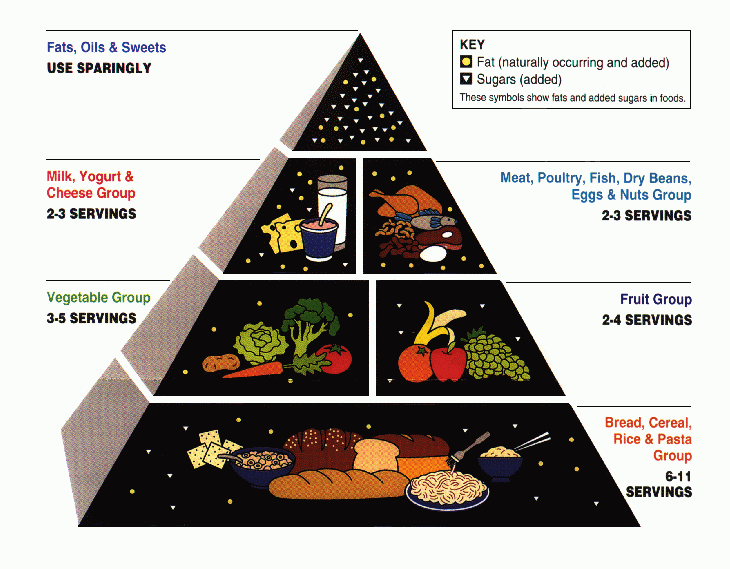
Balanced, healthy eating is based on the "Food Pyramid" which contains six main food groups. Eating a balanced diet means eating foods from each of the six main food groups, each day and excluding fats, oils & sweets.
The Food Pyramid (6 Food Groups)

1. Fats, Oils, Sweets: Use Sparingly
2. Milk, Yogurt & Cheese: 2-3 Servings
3. Meat, Poultry, Fish, Dry Beans, Eggs, Nuts: 2-3 Servings
4. Vegetables: 3-5 Servings
5. Fruits: 2-4 Servings
6. Bread, Cereal, Rice, Pasta: 6-11 Servings
If you follow the recommended servings for each of the six food groups (Fats, Milk, Vegetables, Meat/eggs, Fruit, Bread/pasta etc.) each day, and choose lower-fat, lower sugar brands, you are sure to get sufficient nutrients like: protein, vitamins, minerals and fiber.
By choosing the lower number of servings from each group your calorie intake should add up to about 1600 calories, per day. If you choose the highest number from each group, your calorie intake should be about 2800-2900 calories, per day.
Food Pyramid Serving Sizes
Food Group Serving Size
Bread, Cereal, Rice, Pasta, Noodles 1 slice bread; 1/2 hamburger bun or English muffin; 1 small roll, muffin, or biscuit; 5-6 small crackers; 1/2 cup cooked cereal, rice, pasta, noodles; 1 ounce ready-to-eat cereal.
Vegetables 1/2 cup cooked/raw vegetables; 1 cup leafy raw vegetables; 1/2 cup cooked peas, beans, other legumes; 3/4 cup vegetable juice.
Fruit 1 medium apple, banana, orange; 1/2 grapefruit; melon wedge; 3/4 cup fruit juice; 1/2 cup chopped fresh, cooked, canned fruit (in juice); 1/4 cup dried fruit;
Milk, Yogurt, Cheese 1 cup milk; 8 ounces yogurt; 1.5 ounces natural cheese; 2 ounces processed cheese.
Meat, Poultry, Fish, Dry Beans, Eggs and Nuts In this group 2-3 servings equals 5-7 ounces of cooked lean meat, or poultry without skin, or fish. Note: 1 egg (or 2 egg whites), 1 tbsp nuts, or 1/2 cup cooked peas, beans count as 1 ounce of meat.
Fats, Oils and Sweets Use sparingly. Note: Use fats/oils low in saturated fat. Unprocessed vegetable oils are best. Avoid fats with hydrogenated fat or trans-fatty acids.
Alcohol is not included in the Food Guide Pyramid. But official advice is to limit consumption to two drinks a day (male) or one drink a day, (female). [One drink = 12oz beer; or 1.5oz spirits; or 5oz wine.]
The Food Pyramid (6 Food Groups)
1. Fats, Oils, Sweets: Use Sparingly
2. Milk, Yogurt & Cheese: 2-3 Servings
3. Meat, Poultry, Fish, Dry Beans, Eggs, Nuts: 2-3 Servings
4. Vegetables: 3-5 Servings
5. Fruits: 2-4 Servings
6. Bread, Cereal, Rice, Pasta: 6-11 Servings
If you follow the recommended servings for each of the six food groups (Fats, Milk, Vegetables, Meat/eggs, Fruit, Bread/pasta etc.) each day, and choose lower-fat, lower sugar brands, you are sure to get sufficient nutrients like: protein, vitamins, minerals and fiber.
By choosing the lower number of servings from each group your calorie intake should add up to about 1600 calories, per day. If you choose the highest number from each group, your calorie intake should be about 2800-2900 calories, per day.
Food Pyramid Serving Sizes
Food Group Serving Size
Bread, Cereal, Rice, Pasta, Noodles 1 slice bread; 1/2 hamburger bun or English muffin; 1 small roll, muffin, or biscuit; 5-6 small crackers; 1/2 cup cooked cereal, rice, pasta, noodles; 1 ounce ready-to-eat cereal.
Vegetables 1/2 cup cooked/raw vegetables; 1 cup leafy raw vegetables; 1/2 cup cooked peas, beans, other legumes; 3/4 cup vegetable juice.
Fruit 1 medium apple, banana, orange; 1/2 grapefruit; melon wedge; 3/4 cup fruit juice; 1/2 cup chopped fresh, cooked, canned fruit (in juice); 1/4 cup dried fruit;
Milk, Yogurt, Cheese 1 cup milk; 8 ounces yogurt; 1.5 ounces natural cheese; 2 ounces processed cheese.
Meat, Poultry, Fish, Dry Beans, Eggs and Nuts In this group 2-3 servings equals 5-7 ounces of cooked lean meat, or poultry without skin, or fish. Note: 1 egg (or 2 egg whites), 1 tbsp nuts, or 1/2 cup cooked peas, beans count as 1 ounce of meat.
Fats, Oils and Sweets Use sparingly. Note: Use fats/oils low in saturated fat. Unprocessed vegetable oils are best. Avoid fats with hydrogenated fat or trans-fatty acids.
Alcohol is not included in the Food Guide Pyramid. But official advice is to limit consumption to two drinks a day (male) or one drink a day, (female). [One drink = 12oz beer; or 1.5oz spirits; or 5oz wine.]
Weight Watching Tips - Eating Habits
Eating Habits
The first step you should take is to adopt healthier eating habits. Not only will you gain more food volume this way but you can use natural low calorie seasonings such as onions to improve the taste. This is proven for long term health and fat loss while removing the strain of dieting itself. Here are a few tips on improving your eating habits:
1. It takes the brain approximately 20 minutes to tell the body that it is full. Therefore, if you eat slower or wait awhile before you decide to take more you are less likely to eat more than you need to.
2. Never go to the grocery store while you are hungry. You will almost always end up with something that you do not need, like junk food for example. It is also a good idea to plan ahead and arm yourself with a grocery list.
3. Drink an 8 oz. glass of water before and after each meal. This will help battle the feeling of being hungry while restricting your calories.
4. No matter what type of diet you are on, the main objective is a slight reduction in calories therefore resulting in mild to extreme hunger attacks. This is normal. Usually it will take a week or two for your stomach to shrink and adjust to these new portions, that's why the first few weeks are the hardest.
5. Next time you go to grab a quick snack, ask yourself - "Am I really hungry?" You would be surprised at how many times we eat for other reasons such as depression, habit or sheer boredom. If you find that the reason is one other than hunger, try and replace it with another pleasure to take its place.
6. Remember the old saying, "Everything in moderation"
7. If you eat the same amount of calories day in and day out your body will get used to that specific amount of calories resulting in a slower metabolsim. Give it something to work with and eat more calories once every week or two. Your metabolism will then speed up over the week as a result.
8. Lose weight with spicy foods. Hot peppers can increase your metabolism. Frequently adding them to meals will increase your body temperature therefore creating a more constructive metabolism.
9. If you are always on the run because of work or school and simply don't have the time to prepare healthy meals quickly, try a protein bar. They come in many delicious flavors such as chocolate and eating more frequently also works to speed up your metabolic rate.
10. Write down what you eat and stick with it. You'd be surprised at how many extra things you might be eating if you don't write your menu down. Either plan ahead with your food intake or start keeping a food journal just to see.
The first step you should take is to adopt healthier eating habits. Not only will you gain more food volume this way but you can use natural low calorie seasonings such as onions to improve the taste. This is proven for long term health and fat loss while removing the strain of dieting itself. Here are a few tips on improving your eating habits:
1. It takes the brain approximately 20 minutes to tell the body that it is full. Therefore, if you eat slower or wait awhile before you decide to take more you are less likely to eat more than you need to.
2. Never go to the grocery store while you are hungry. You will almost always end up with something that you do not need, like junk food for example. It is also a good idea to plan ahead and arm yourself with a grocery list.
3. Drink an 8 oz. glass of water before and after each meal. This will help battle the feeling of being hungry while restricting your calories.
4. No matter what type of diet you are on, the main objective is a slight reduction in calories therefore resulting in mild to extreme hunger attacks. This is normal. Usually it will take a week or two for your stomach to shrink and adjust to these new portions, that's why the first few weeks are the hardest.
5. Next time you go to grab a quick snack, ask yourself - "Am I really hungry?" You would be surprised at how many times we eat for other reasons such as depression, habit or sheer boredom. If you find that the reason is one other than hunger, try and replace it with another pleasure to take its place.
6. Remember the old saying, "Everything in moderation"
7. If you eat the same amount of calories day in and day out your body will get used to that specific amount of calories resulting in a slower metabolsim. Give it something to work with and eat more calories once every week or two. Your metabolism will then speed up over the week as a result.
8. Lose weight with spicy foods. Hot peppers can increase your metabolism. Frequently adding them to meals will increase your body temperature therefore creating a more constructive metabolism.
9. If you are always on the run because of work or school and simply don't have the time to prepare healthy meals quickly, try a protein bar. They come in many delicious flavors such as chocolate and eating more frequently also works to speed up your metabolic rate.
10. Write down what you eat and stick with it. You'd be surprised at how many extra things you might be eating if you don't write your menu down. Either plan ahead with your food intake or start keeping a food journal just to see.
Weight Loss Tips - Weight Training
Weight training tones your muscles and raises your metabolism, which helps your body burn more calories 24 hours-a-day, even while sleeping. Here are the top reasons to make weight training a part of you weight loss program:
* Reverse the natural decline in your metabolism which begins around age 30.
* Become energized.
* Positive effect on almost all of your 650+ muscles.
* Strengthens bones, reducing your risk of developing osteoporosis.
* Improves muscular endurance.
* Will not develop big muscles on women, just toned muscles.
* Makes you strong. Strength gives you confidence and makes daily activities easier.
* Makes you less prone to low-back injuries.
* Decreases your resting blood pressure.
* Decreases your risk of developing adult onset diabetes.
* Decreases your gastrointestinal transit time, reducing your risk for developing colon cancer.
* Increases your blood level of HDL cholesterol (the good type).
* Improves your posture.
* Improves the functioning of your immune system.
* Lowers your resting heart rate, a sign of a more efficient heart.
* Improves your balance and coordination.
* Elevates your mood.
* Reverse the natural decline in your metabolism which begins around age 30.
* Become energized.
* Positive effect on almost all of your 650+ muscles.
* Strengthens bones, reducing your risk of developing osteoporosis.
* Improves muscular endurance.
* Will not develop big muscles on women, just toned muscles.
* Makes you strong. Strength gives you confidence and makes daily activities easier.
* Makes you less prone to low-back injuries.
* Decreases your resting blood pressure.
* Decreases your risk of developing adult onset diabetes.
* Decreases your gastrointestinal transit time, reducing your risk for developing colon cancer.
* Increases your blood level of HDL cholesterol (the good type).
* Improves your posture.
* Improves the functioning of your immune system.
* Lowers your resting heart rate, a sign of a more efficient heart.
* Improves your balance and coordination.
* Elevates your mood.
Do More Squats and Lunges
Forget about butt-busting fitness gadgets. A recent fitness poll certified fitness professionals found simple squats and lunges to be the best ways to tone and shape the gluteal muscles.
More than 36,000 certified fitness professionals were asked to name the best exercise for achieving a shapely rear end. Most of the respondents said the best overall exercise was squats - with or without weights. Lunges were named a close second.
Both exercises require core body balance and strength to isolate lower-body muscle groups. But other favorites were just as basic. Walking uphill, jogging and stair climbing rounded out the top-five.
Richard Cotton, an exercise physiologist, is quick to point out that toning and shaping any muscle group requires incorporating a strong aerobic component into your exercise program.
"Squats and lunges will work to strengthen your gluteals, as well as most of the major muscle groups of the lower body," Cotton said, "but you will only see a change in shape if you are doing fat-burning aerobic exercise and watching your diet as well. You'll get the strength benefits doing squats and lunges, but there will be no change in appearance without a well-rounded approach.
"Your best bet is walking uphill. It's the best combination of aerobic activity to burn fat and anaerobic activity to shape muscles."
Here are the top gluteal/lower-body exercises, according to surveyed certified fitness professionals:
1. Squats, with or without weights
2. Lunges
3. Walking, especially uphill
4. Jogging, running, or sprinting
5. Stair Climbing
Cotton also strongly warns against believing any specific exercise is a sure-fire way to get the body you desire. A number of factors determine body size and shape, including diet, cardiovascular conditioning, and strength training. But according to Cotton, something none of us can control - genetics - is the No. 1 factor in body shape.
If you're going to do it... do it right! Improperly done, any exercise can have poor results and more importantly cause injury.
More than 36,000 certified fitness professionals were asked to name the best exercise for achieving a shapely rear end. Most of the respondents said the best overall exercise was squats - with or without weights. Lunges were named a close second.
Both exercises require core body balance and strength to isolate lower-body muscle groups. But other favorites were just as basic. Walking uphill, jogging and stair climbing rounded out the top-five.
Richard Cotton, an exercise physiologist, is quick to point out that toning and shaping any muscle group requires incorporating a strong aerobic component into your exercise program.
"Squats and lunges will work to strengthen your gluteals, as well as most of the major muscle groups of the lower body," Cotton said, "but you will only see a change in shape if you are doing fat-burning aerobic exercise and watching your diet as well. You'll get the strength benefits doing squats and lunges, but there will be no change in appearance without a well-rounded approach.
"Your best bet is walking uphill. It's the best combination of aerobic activity to burn fat and anaerobic activity to shape muscles."
Here are the top gluteal/lower-body exercises, according to surveyed certified fitness professionals:
1. Squats, with or without weights
2. Lunges
3. Walking, especially uphill
4. Jogging, running, or sprinting
5. Stair Climbing
Cotton also strongly warns against believing any specific exercise is a sure-fire way to get the body you desire. A number of factors determine body size and shape, including diet, cardiovascular conditioning, and strength training. But according to Cotton, something none of us can control - genetics - is the No. 1 factor in body shape.
If you're going to do it... do it right! Improperly done, any exercise can have poor results and more importantly cause injury.
Five Reasons Why to Get a Personal Trainer
Why get a personal trainer?
1. A personal trainer can show you how to lift weights safely. The trainer can spot you so that you don't exceed your limits and drop the weight on yourself.
2. A personal trainer can develop a personal exercise program to help you meet your goals. Maybe you want to lose weight or gain some mass. Perhaps you have special needs that the trainer can help you train for.
3. A personal trainer can help you get out of a stale routine so that you can make new gains. Every three to four weeks consider changing your program so that you keep your body off balance and make new gains. The body adapts very easily and needs variety.
4. A personal trainer can motivate you to get to the gym and lift that weight that extra repetition. If a trainer is waiting for you at the gym you are much more inclined to get yourself out of bed.
5. A personal trainer can help you with your technique. The trainer can help you lift the weight so that you can get the optimum results.
1. A personal trainer can show you how to lift weights safely. The trainer can spot you so that you don't exceed your limits and drop the weight on yourself.
2. A personal trainer can develop a personal exercise program to help you meet your goals. Maybe you want to lose weight or gain some mass. Perhaps you have special needs that the trainer can help you train for.
3. A personal trainer can help you get out of a stale routine so that you can make new gains. Every three to four weeks consider changing your program so that you keep your body off balance and make new gains. The body adapts very easily and needs variety.
4. A personal trainer can motivate you to get to the gym and lift that weight that extra repetition. If a trainer is waiting for you at the gym you are much more inclined to get yourself out of bed.
5. A personal trainer can help you with your technique. The trainer can help you lift the weight so that you can get the optimum results.
Subscribe to:
Posts (Atom)